The Art of Dressing for the Tropics
Dressing well in perpetual heat is not about wearing less. It is a discipline of fabric, cut and restraint that most temperate wardrobes never have to learn.
 By Daniel Koh
30 August 2026 · 6 min read
By Daniel Koh
30 August 2026 · 6 min read

There is a particular kind of composure that belongs to men who have made peace with the tropics — who arrive at a lunch meeting at midday looking as unhurried as they did at breakfast, while everyone else is peeling off a jacket and dabbing at their collar. It is not a matter of willpower. It is a matter of knowing which fabrics breathe, which cuts allow air to move, and which habits of temperate dressing need to be unlearned entirely. Singapore, sitting one degree north of the equator with humidity that rarely dips below seventy percent, is possibly the toughest testing ground in the world for a wardrobe. Get it right here and it will work anywhere hot.
Start with fibre, not colour
The instinct is to reach for lighter colours in heat, and there is some truth to that — pale shades reflect rather than absorb heat, and read cooler to the eye even when the physical difference is marginal. But the far more consequential decision is fibre. Linen remains unmatched for genuine breathability: its long, hollow fibres let air pass through the weave in a way that cotton, for all its virtues, cannot quite replicate. The trade-off is the crumple, which is not a flaw to be ironed out so much as a texture to be accepted — a linen shirt that looks pressed by 2pm has usually been treated with something synthetic to stop it creasing, which defeats the purpose entirely. For a deeper look at the fabric that does more work in this climate than any other, see our piece on the linen shirt and the art of summer.
Cotton has its place too, particularly a fine, open-weave poplin or oxford, but it should be chosen deliberately rather than defaulted to out of habit from a colder wardrobe. And technical blends — merino-nylon hybrids designed for travel — deserve more credit than the tropics usually give them; they wick moisture aggressively and resist creasing, which makes them genuinely useful for the stretch between air-conditioned office and humid commute.
Cut matters more than fabric weight
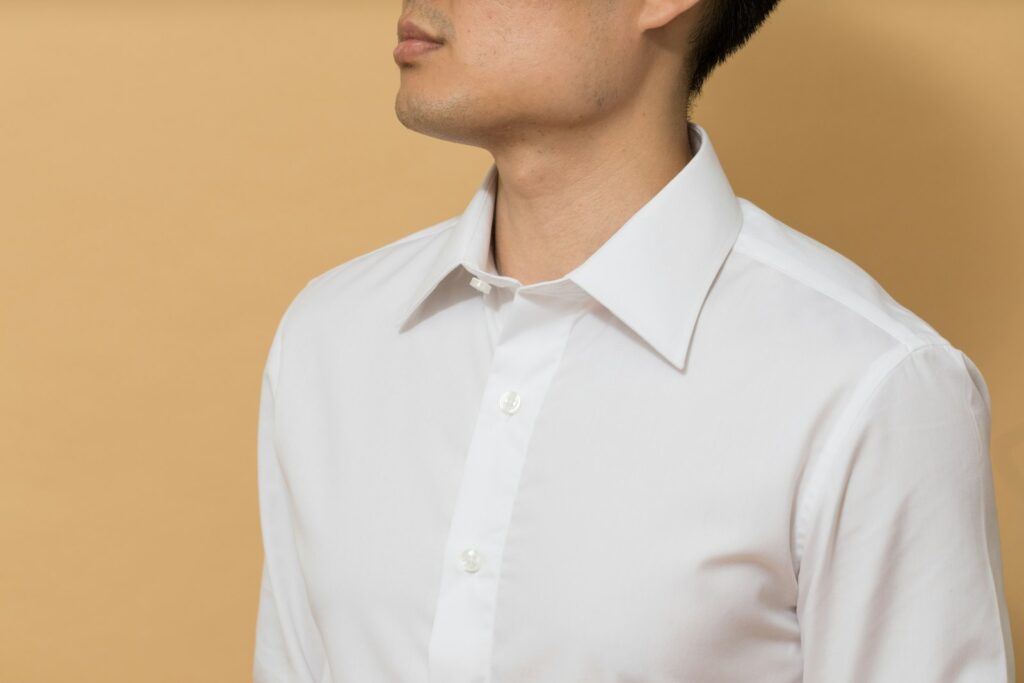
A slim-fit shirt in the world’s most breathable linen will still trap heat against the body if it has no room to move. The tropics reward a slightly more generous cut through the chest and back — enough ease that air can actually circulate between fabric and skin, which is the entire mechanism by which natural fibres cool you. This does not mean baggy. It means proportioned for movement rather than for the tightest possible silhouette, a distinction we explore at length in our note on why fit beats everything else.
Trousers follow the same logic. A slightly higher rise and a room-through-the-thigh cut, tapering cleanly at the ankle, moves air far more efficiently than a skinny fit ever will, while still reading as sharp rather than sloppy. Tailored chinos in a lightweight cotton-linen blend do more genuine work in this climate than almost any other single trouser.
The pieces worth owning
- Two or three linen shirts in pale, warm neutrals — the crumple reads as intentional at this quantity, rather than as one shirt that has simply had a long day.
- A short-sleeve knit polo in a breathable cotton or cotton-silk blend, for the register between shirt and t-shirt that hot-climate dressing needs constantly.
- Unlined tailoring, if a jacket is unavoidable — a half-canvas or unstructured jacket in tropical wool or a linen blend will survive a Singapore afternoon in a way a fully lined suit cannot.
- Leather sandals or unlined loafers that let feet breathe without abandoning polish entirely.
The layering paradox
Singapore’s real climate challenge is not the heat outside but the cold inside — offices, malls and restaurants are frequently over-air-conditioned to the point of requiring a layer indoors that would be unbearable on the pavement. This is where a fine-gauge knit or an unlined blazer earns its place, thrown on for the walk from car park to conference room and shed the moment the meeting ends. Building a wardrobe around this back-and-forth, rather than fighting it, is the real skill of dressing here — a theme we return to in our piece on the quiet art of layering, which applies as much to heat management as it does to cold-climate dressing.
“The men who dress best in the tropics have usually stopped fighting the climate and started designing around it — fewer pieces, better fibres, and total honesty about how the day is actually going to go.”
What to leave at home
Heavy worsted wool suits, anything with a stiff interlining, and dark colours worn for a full outdoor day are all better suited to temperate climates and should be reserved, if owned at all, for the rare fully air-conditioned formal occasion. Ties in heavy silk are similarly punishing; a grenadine or lighter-weight silk breathes considerably better for the brief periods a tie is genuinely required. The goal throughout is restraint rather than austerity — a wardrobe edited down to pieces that are doing real work, rather than one padded out with garments that only function eight months of the year somewhere else.
Footwear and the final ten percent
It is easy to get shirt, trouser and jacket right and then undo all of it with the wrong shoe. Closed leather shoes without socks trap heat and, over a long humid day, will punish both the shoe and the wearer. A well-made leather sandal, a breathable espadrille, or an unlined loafer worn with fine no-show socks does far more work in this climate, and none of it reads as underdressed once the rest of the outfit is doing its job properly. The same logic that governs shirting applies here — natural materials, room to breathe, and a willingness to let the climate dictate the final ten percent of any outfit rather than fighting it on principle.
The considered take
Dressing well for the tropics is ultimately a discipline of honesty — about fabric, about cut, about which pieces from a colder wardrobe simply do not translate. Master the handful of principles above and the payoff is considerable: looking composed, cool and unhurried in a climate that makes most men look like they are losing a small daily battle. For more on the wardrobe philosophy behind pieces like this, visit our Style & Watches section.
Daniel has spent fifteen years arguing that the best watch is the one you never take off.