Why a Brown Leather Belt Beats Black
If you own one belt, make it brown. Here is why a good brown leather belt beats black for versatility, character and the way it improves with each year of wear.
 By Daniel Koh
1 September 2026 · 6 min read
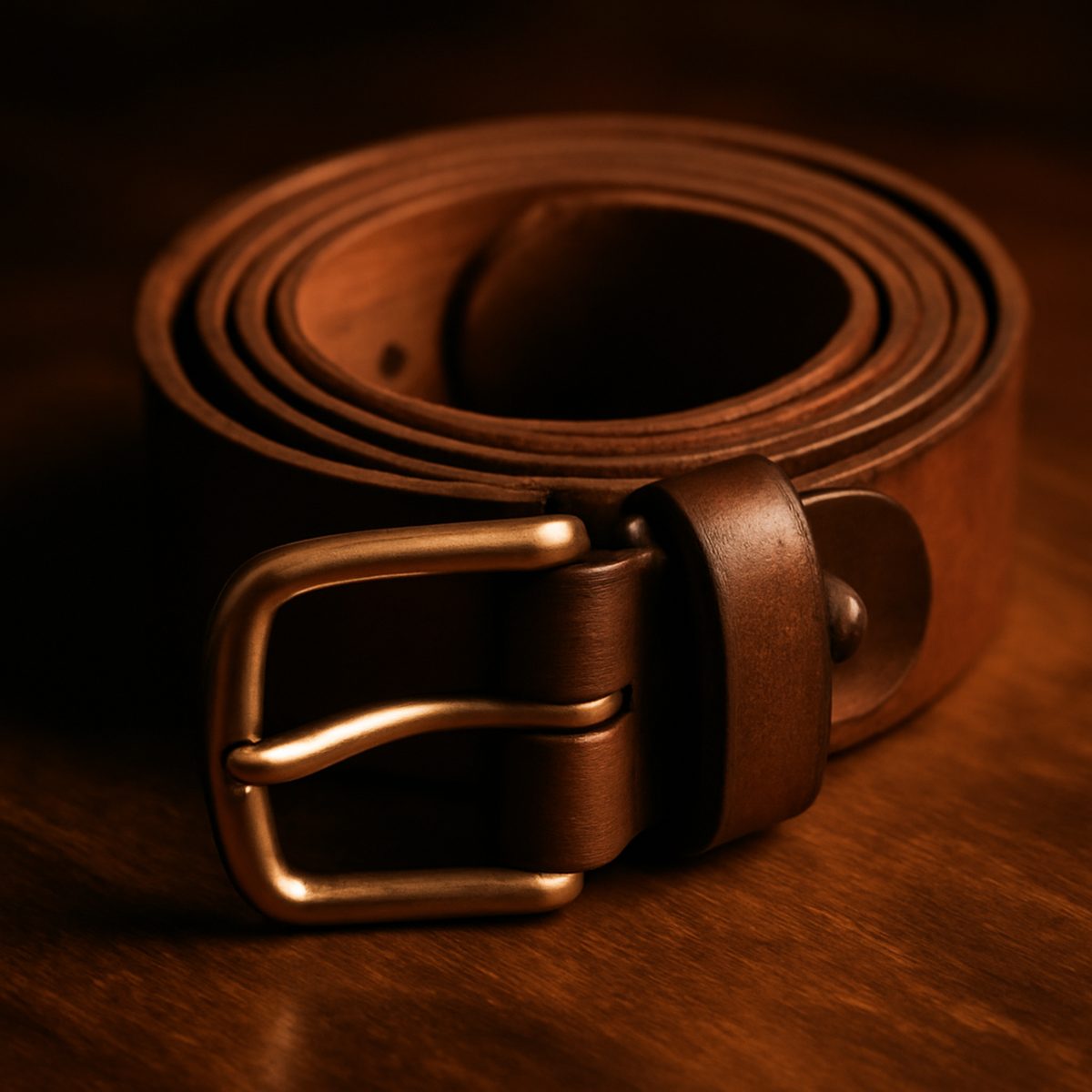
Ask a well-dressed man which single belt he would keep if he could keep only one, and the answer, more often than not, is brown. Not because black has no place, but because a good brown leather belt is simply more useful, more characterful and more forgiving than its formal black cousin. It works with more of your wardrobe, ages more beautifully, and forgives the small imperfections of everyday wear in a way black never quite does. If you are going to invest in one belt and wear it for years, the case for brown is close to overwhelming.
This is not to banish black entirely; a black belt has its role, chiefly with formal black shoes and business suits. But for the way most men actually dress most of the time, in earthy colours, in denim and chinos, in brown boots and suede loafers, brown is the belt that ties it all together. And unlike black, it only gets better as it goes.
Versatility, first and foremost
The practical argument for brown is its range. A mid-brown belt sits happily with jeans, chinos, olive and tan trousers, grey flannels and most casual and business-casual outfits. It pairs naturally with the brown and tan footwear that dominates most modern wardrobes, and it works with far more colours of clothing than stark black, which can look heavy and abrupt against soft, earthy tones.
Black, by contrast, is comparatively narrow: it belongs with formal black shoes and little else, and worn with brown footwear or casual clothes it tends to jar. The old rule of matching your belt to your shoes still holds broadly true, and since most men’s shoes are brown, so, logically, should be most men’s belts. If you have invested in good bridle leather that improves with age, a brown belt lets that quality show and develop in the open, where a black one hides it.
The beauty of ageing
Here is brown’s decisive advantage: it develops a patina. Good vegetable-tanned brown leather darkens, softens and deepens with wear, picking up a richness and a lived-in character that no new belt can fake. Every year of use adds to it, until the belt tells a quiet story of where it has been. Black leather simply cannot do this in the same way; scuffs show as pale marks rather than mellowing into character, and it looks worn out rather than worn in.
A black belt looks its best the day you buy it and slowly declines; a good brown belt looks its best a few years in, and improves for a decade after that.
This capacity to improve rather than degrade is the essence of buying well, and it is the same quality that makes so many leather goods worth the investment. The principle runs through everything from a good belt to a good bag, as our piece on the leather goods that age beautifully explores: buy honest, undyed or lightly finished leather, and time becomes an ally rather than an enemy.
What to look for
A belt worth keeping is made of full-grain leather, ideally vegetable-tanned, cut in a single solid piece rather than bonded or layered from scraps. Bend it: a good belt flexes smoothly and feels dense and substantial; a cheap one feels stiff, spongy or hollow, and will crack and delaminate within a season or two. The hardware matters too, a solid, well-finished buckle in a metal that suits your other accessories. For a broader look at what to buy, see our guide to the best everyday belts and buckles.
- Leather: full-grain, single-ply, ideally vegetable-tanned so it develops a patina.
- Colour: a versatile mid-brown or tan covers the most ground; very dark browns edge towards black’s formality.
- Buckle: solid and understated, in a finish that echoes your watch and other metals.
- Width: a slimmer belt for smarter trousers, a slightly wider one for casual wear.
Treated occasionally with a little conditioner and kept from soaking, a belt like this lasts for years and only improves. The small ritual of care is the same one that keeps any good leather sound, and it is worth learning; our notes on caring for leather properly apply as much to a belt as to a pair of shoes.
The one belt to own
If you are building a wardrobe deliberately rather than accumulating one by accident, the brown leather belt is one of the easiest and highest-value decisions you can make. Buy one genuinely good one in a versatile brown, from full-grain leather with honest hardware, and it will serve you across the great majority of your outfits and improve with every wearing. It is the sort of quiet, foundational purchase that pays back many times over.
One last practical note for the undecided: if you are genuinely torn, a dark or chocolate brown splits the difference more gracefully than most people realise. Deep enough to read as almost formal with a dark suit and sober shoes, yet still unmistakably brown and so still at home with denim, tan and casual wear, it is the single most versatile colour a belt can be. Pair it with a matching dark-brown shoe and you have a combination that carries you from the office to the weekend without a change, which is, in the end, exactly what a well-chosen belt is supposed to do.
There is a broader lesson in the humble belt, too, about how to build a wardrobe at all. The pieces that serve you best are rarely the loudest; they are the quiet, foundational things chosen once and well, in versatile colours and honest materials, that work with everything and improve with age. A good brown belt is exactly such a piece, and buying it teaches the habit that underlies all good dressing: spend your attention and your money on the things you will use constantly, and let them, rather than any passing novelty, define how you look.
Keep a black belt too, if formal dress demands it, but let the brown one be the workhorse it was made to be. It is the belt you will actually reach for, the belt that ties your wardrobe together, and the belt that will look better in five years than it does today. For more on the accessories and foundations worth buying once and well, our Style & Watches pages are the place to continue.
Daniel has spent fifteen years arguing that the best watch is the one you never take off.