
Understanding Koji Beyond Miso and Sake
The mould behind miso, soy and sake is reshaping modern kitchens. Understanding koji, the invisible workhorse of Japanese fermentation, and how to cook it.
 By Renée Tan
1 September 2026 · 6 min read
By Renée Tan
1 September 2026 · 6 min read
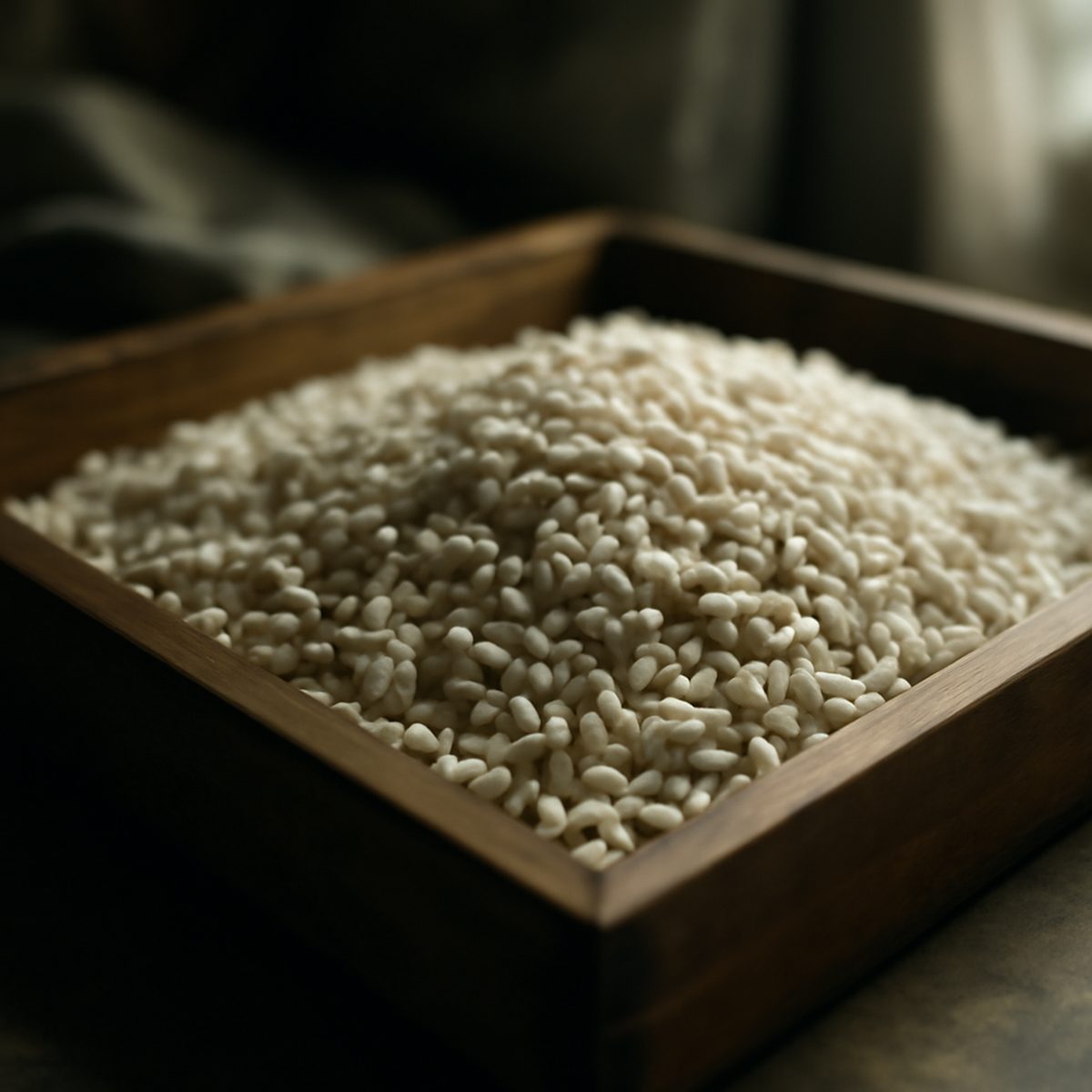
Walk into the kitchen of an ambitious restaurant almost anywhere in Asia now and you will find, tucked in a warm cupboard, a tray of rice furred with something pale and fragrant. This is koji, and though most people have eaten its handiwork all their lives without knowing it, it has become one of the most quietly influential ingredients in modern cooking. To understand it is to understand a great deal about why some food simply tastes deeper than the rest.
What is koji, exactly
Koji is a mould — Aspergillus oryzae — cultivated on cooked grains, usually rice or barley. As it grows, it produces a battery of enzymes that break starches into sugars and proteins into amino acids. Those amino acids, above all glutamate, are the source of savoury depth. Koji, in other words, does not add flavour so much as it unlocks flavour that was already there, converting bland grain into something sweet, aromatic and profoundly savoury.
This is the engine behind an enormous swathe of the Japanese and broader East Asian pantry. Without koji there is no miso, no soy sauce, no sake, no mirin, no rice vinegar. It is the invisible first step in a whole cuisine’s worth of seasoning, which is why cooks who have thought hard about miso, soy and umami inevitably find their way back to it.
Beyond miso and sake
What has changed recently is that cooks have begun using koji directly, rather than only as a step towards a finished product. This is where koji fermentation cooking becomes genuinely exciting, because the same enzymes that make miso can be pointed at almost anything.
- Shio koji — a paste of koji, salt and water — is used as a marinade that tenderises meat and fish while seasoning them deeply.
- Amazake, a sweet, alcohol-free koji drink, doubles as a natural sweetener in dressings and desserts.
- Koji-cured vegetables and proteins develop a savoury complexity in days that would otherwise take weeks of ageing.
The appeal is partly practical — koji accelerates and deepens flavour — and partly philosophical. It belongs to the same slow, patient tradition that runs through all serious fermentation in cooking, the understanding that time and microbes, properly managed, are ingredients in their own right.
Koji does not so much cook food as pre-digest it, doing gently and invisibly what heat does with force. The result is depth without heaviness — savour without the sear.
The link to what we drink
It is easy to forget that koji lives in the glass as well as on the plate. The entire architecture of sake rests on it: koji converts the rice starch into fermentable sugar, which yeast then turns into alcohol. Anyone who has enjoyed a cold, dry cup and wanted to know how it was made will find the story begins with this same mould, and the craft of rice wine and sake brewing is, in large part, the craft of managing koji well.
Cooking with it at home
You do not need a laboratory. Shio koji is now widely sold ready-made across Singapore, and a spoonful rubbed onto a chicken thigh or a fillet of fish an hour before cooking will do more for the flavour than almost any marinade. Use it as you would a gentle salt, and expect a rounder, more savoury result. Those who want to make miso or their own cures will find koji the essential starting point; understanding how to buy and store good miso is a natural next step for anyone drawn to this way of cooking.
The lesson of koji is a broader one about flavour: that the deepest, most satisfying tastes are often not added but coaxed, teased out of ordinary ingredients by patience and a little biological help. It is not a trend so much as a rediscovery of something cooks in this part of the world have known for a very long time. For more on the ferments and pantry staples that reward a closer look, our Dining & Drinks pages keep returning to the quiet chemistry behind good food.
Getting started at home
The good news for the curious cook is that you do not need to grow your own koji to reap its benefits. Ready-made shio koji and its liquid cousin, amazake, are now stocked by Japanese grocers across Singapore, and a jar keeps for weeks in the fridge. Used as a marinade, a splash in a dressing, or a savoury seasoning in place of some of the salt, they offer an easy first taste of what koji can do.
A few simple habits make the most of it. Rub shio koji onto chicken, pork or a firm white fish an hour or two before cooking, then wipe off the excess before it hits the heat, or it will catch and burn. Use it sparingly at first, because its effect is more powerful than its mildness suggests — it seasons, tenderises and deepens all at once. Give it time, too; the enzymes work slowly, and an overnight cure rewards the patience.
- For proteins — a light coating of shio koji, wiped off before cooking, for tenderness and savour.
- For dressings — a spoonful whisked in for salt and a rounded, umami depth.
- For sweetness — amazake in place of some sugar in a marinade or a chilled drink.
For the more adventurous, making your own koji-cured vegetables or a simple miso is a genuinely rewarding project, and the ingredients are increasingly easy to find. But there is no need to run before you can walk. A single jar of shio koji, used thoughtfully over a few weeks, will teach you more about the ingredient than any amount of reading — and will very likely change the way you season everything else.
What makes koji so quietly compelling is that it belongs to no single cuisine’s future or past. It is ancient and utterly contemporary at once — a technique that has seasoned East Asian food for a thousand years, now finding fresh purpose in kitchens on every continent. To cook with it is to join a very long conversation about how patience, warmth and a helpful microbe can turn the plainest grain into something deep and alive. You need no special equipment and no great skill to begin; you need only curiosity, a warm cupboard and a willingness to let time do the work that heat alone never can.
Start with a jar of shio koji and a single piece of fish. The difference will make the case far better than any explanation can.
Renée has covered Singapore's restaurants for over a decade, with a soft spot for the kitchens most people walk past.


