The Slow Revival of the Collared Beef
Collared beef, spiced and rolled and pressed, is an old English craft finding new admirers. A look at why the slow method still earns its place today.
 By Renée Tan
2 September 2026 · 7 min read
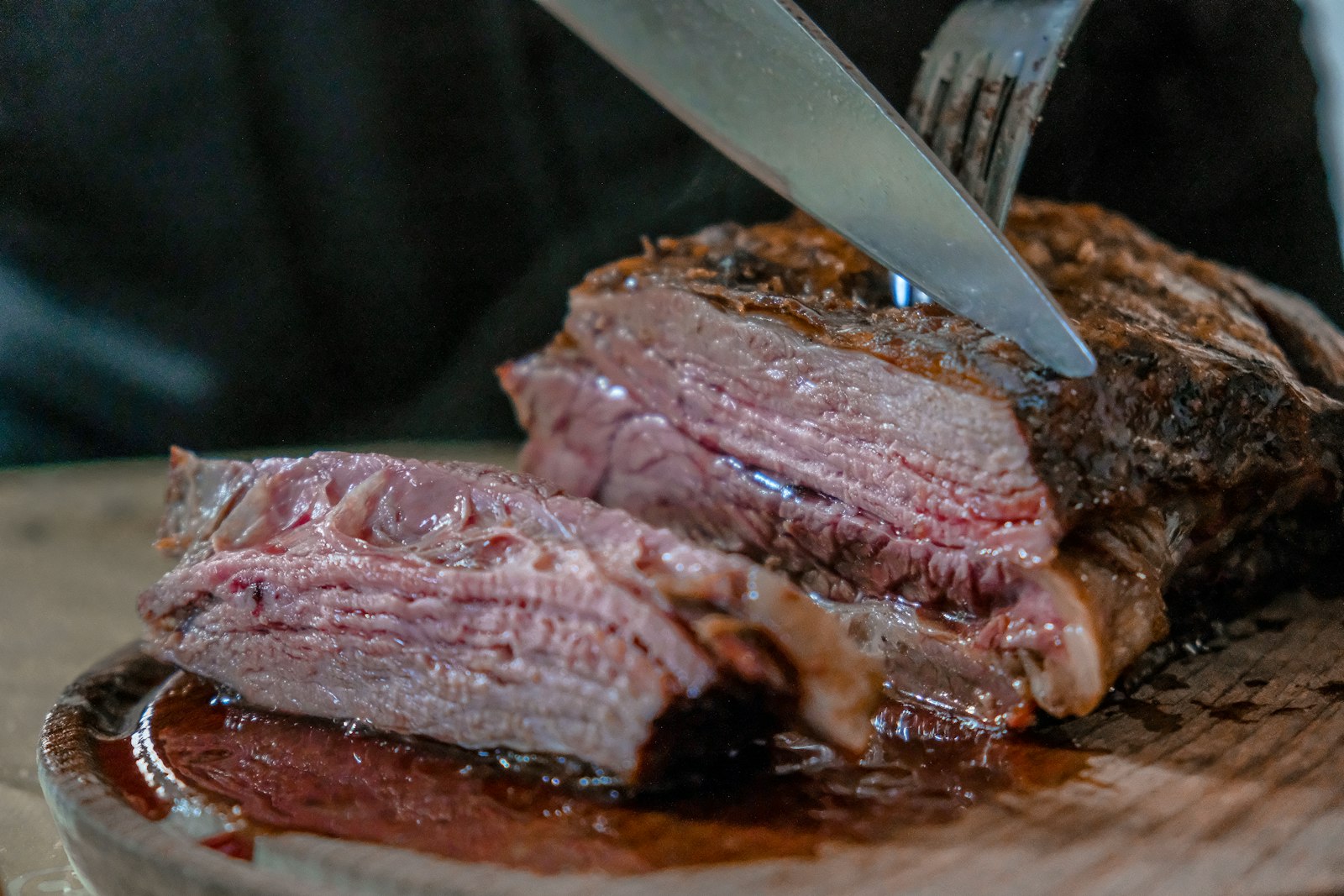
There is a whole category of cooking that fell out of fashion not because it stopped tasting good but because it stopped being convenient, and collared beef sits squarely within it. To collar a piece of meat is to spice it, roll it tightly, bind it and cook it slowly until it can be pressed and sliced cold into something between a roast and a charcuterie. It is old, unhurried, thrifty English craft, and it is quietly finding admirers again among cooks who have grown tired of speed and are drawn instead to the deep pleasure of doing one thing properly over several days.
The revival makes sense. Collared beef asks for cheap cuts, a little spice, and patience rather than skill. What it gives back is a larder standby of real character: fragrant, faintly peppery, and endlessly useful for a considered table.
What collaring actually means
The word describes the method rather than a specific cut. A flat piece of beef, often flank or brisket, is rubbed with a mixture of salt and warming spices, left to cure for a few days, then rolled tightly into a cylinder, tied or wrapped in a cloth, and gently simmered for hours. Once cooked it is pressed under a weight as it cools, which compacts the meat so it slices cleanly and evenly. The result is dense, spiced and beautifully marbled with the gelatine that long, slow cooking coaxes from the connective tissue.
It sits within a family of slow, preserving techniques that share the same logic of salt and time, and anyone drawn to the craft will find natural companions in a primer on salt baking and curing. This is cooking as much about the transformation over days as about the heat on the day.
The spicing is the signature
What lifts collared beef above a plain boiled joint is the cure. The classic mixture leans on black pepper, allspice, mace and a little clove, sometimes with juniper or bay, rubbed thoroughly into the meat and given time to penetrate. The spices perfume the beef from the inside out, so that a cold slice carries a low, aromatic warmth rather than a surface seasoning.
- Cure patiently — three or four days in the refrigerator lets the salt and spice do their work.
- Roll it tight — air pockets spoil the slice and the keeping; bind it firmly.
- Simmer, never boil — a bare tremble in the water keeps the meat tender.
- Press as it cools — the weight is what gives the finished collar its clean, sliceable density.
Collaring is a lesson in delayed gratification. Nothing about it can be hurried, and everything about it improves with a day of waiting.
Part of a quiet revival
Collared beef is not alone in coming back into view. There is a broader movement among considered cooks toward the old preserving arts, the potted and the pressed and the cured, dishes that once earned their place in the larder through thrift and now earn it through flavour and craft. It sits happily alongside something like the slow revival of the potted cheese, another old English standby enjoying a second life on the modern table. Both share a certain honest, unshowy generosity.
Understanding the beef itself helps, too. The cheaper, harder-working cuts that suit collaring are the same ones prized by anyone who has read dry-aged beef explained for the curious, and they respond to the same principle: connective tissue, given time and gentle heat, becomes a virtue rather than a fault. The technique has a cousin in the wet, slow world of the braise, though here the goal is a firm, cold slice rather than a soft, hot spoonful.
A dish born of necessity
It helps to remember why collared beef existed in the first place. Before refrigeration, a household that slaughtered or bought a large animal had to preserve the meat somehow, and salting, spicing and slow-cooking were the tools to hand. Collaring took a flat, awkward, often cheap cut and turned it into something that would keep for a week or more in a cold larder, ready to be sliced for the table whenever it was wanted. It was, in other words, a thrift dish, born of the same practical intelligence that gave us potted meats, brawn and the whole tradition of the cold larder.
That history is written into the method. The tight roll excludes air, which slows spoilage; the salt and spice cure both flavours and preserves; the pressing gives a dense, sliceable form that travels and keeps. Understanding this makes the dish feel less like an eccentric project and more like a piece of living culinary heritage, one that solved a real problem elegantly and, almost incidentally, tasted wonderful. The old cookery books are full of such dishes, and collared beef is among the most rewarding to revive.
There is also a pleasing seasonality to it. Collared beef was traditionally a cold-weather and festive food, made in quantity to see a household through a stretch of celebration or a lean spell, sliced cold alongside pickles and bread when there was neither time nor appetite for cooking. Making it now, even in a warm climate, connects you to that rhythm of preparing ahead and eating at leisure, which is its own quiet luxury.
How to serve it, and why to bother
Collared beef is a cold-table stalwart. Slice it thin and serve with sharp pickles, a spoonful of good mustard, and bread; fold it into a sandwich that puts the shop-bought version to shame; lay it out as part of a spread where its spiced depth holds its own against cheese and chutney. It keeps well, wrapped, for a week or more, which is precisely the point of a dish born of the larder.
To make it is to opt out, for a few days, of the culture of the quick result. You cure, you wait, you roll, you simmer, you press, and only then do you slice. In a kitchen dominated by speed, that patience is itself a kind of luxury, and it is the sort of considered, hands-on tradition our Dining & Drinks pages are glad to see returning. Collared beef will never be fast food. That is exactly why it is worth reviving.
Frequently asked questions
What is collared beef?
Collared beef is a traditional English preparation in which a flat cut, such as flank or brisket, is cured with salt and spices, rolled tightly, tied, simmered slowly, then pressed as it cools. It is served cold in thin slices, like a cross between a roast and charcuterie.
Which spices are used in collared beef?
Classic spice mixes include black pepper, allspice, mace and a little clove, sometimes with juniper or bay. The spices are rubbed into the meat with salt and left to cure for several days, perfuming the beef from within.
How long does collared beef take to make?
Allow about five days. The beef cures in the refrigerator for three or four days, then is rolled, tied and gently simmered for several hours. It is pressed under a weight overnight as it cools before slicing.
How long does collared beef keep?
Wrapped well and refrigerated, collared beef typically keeps for about a week. The cure and tight rolling help preserve it, but always store it cold and use clean utensils when slicing. Discard if it develops an off smell or slimy surface.
How do you serve collared beef?
Slice it thinly and serve cold with sharp pickles, good mustard, chutney and fresh bread. It also makes excellent sandwiches and works well on a cold buffet alongside cheese. Its spiced flavour suits festive tables and relaxed weekend lunches.
Renée has covered Singapore's restaurants for over a decade, with a soft spot for the kitchens most people walk past.