The Rise of the Integrated Bracelet Watch
The steel sports watch, bracelet flowing straight from the case with no lugs to break the line, has quietly become the shape everyone wants.
 By Daniel Koh
30 August 2026 · 6 min read
By Daniel Koh
30 August 2026 · 6 min read
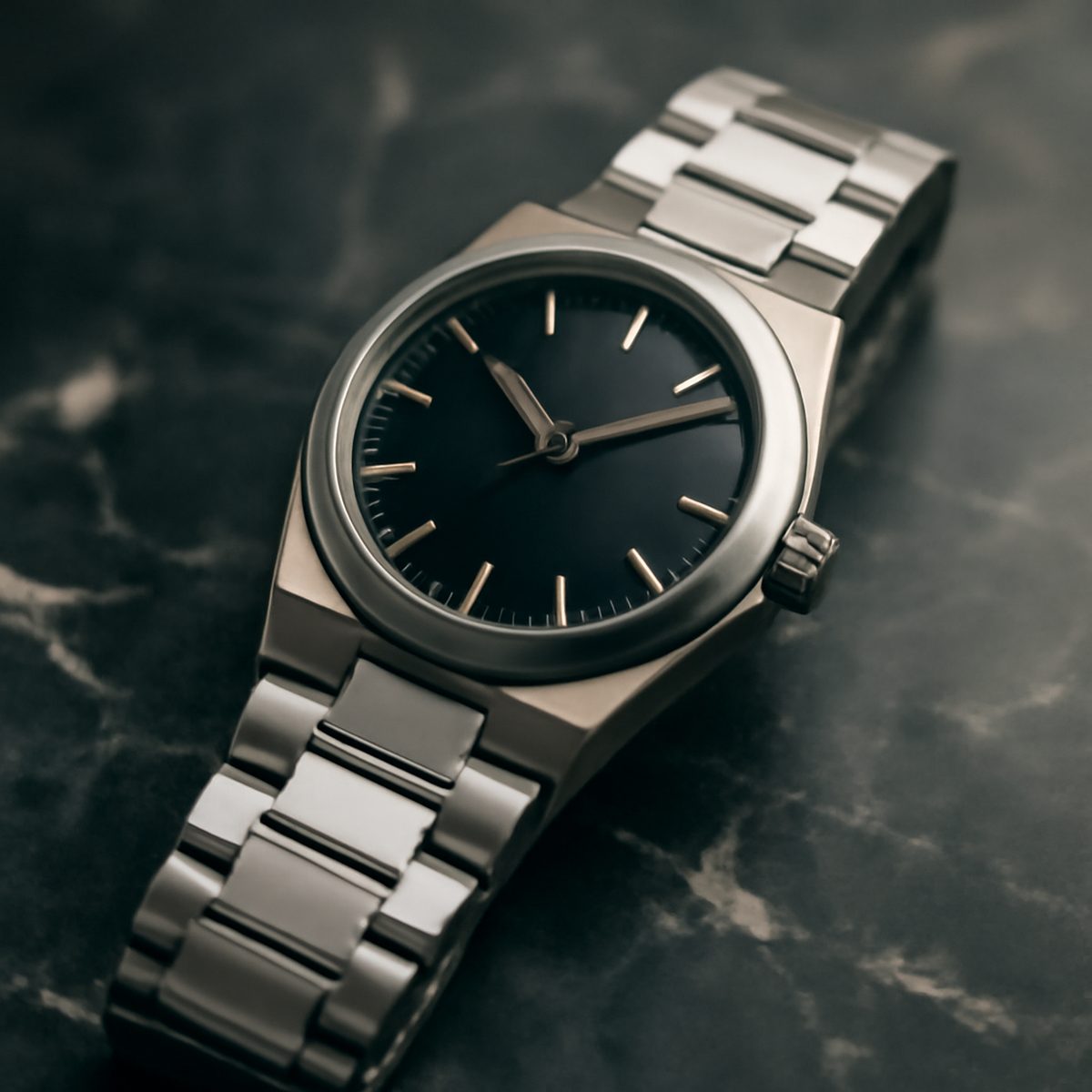
Ask a watchmaker in the trade to name the single silhouette that has reshaped the industry over the past decade, and most will not mention a complication at all. They will mention a bracelet. Specifically, the kind that appears to grow directly out of the case, without a lug in sight, so the whole object reads as one continuous piece of articulated steel rather than a dial bolted to a strap. This is the integrated bracelet watch, and in Singapore’s watch bars, private sales rooms and pre-owned counters, it is the shape everyone is chasing.
What “integrated” actually means
On a conventional watch, the case and the strap are two separate ideas joined by lugs — the small metal horns that anchor a leather band or a bracelet at an angle. An integrated bracelet does away with that seam. The links taper directly from the case flank, following its geometry so precisely that the eye cannot find where one ends and the other begins. The effect, done well, is architectural: the watch sits on the wrist less like jewellery and more like a piece of engineered sculpture, angular yet fluid, industrial yet exact.
This is harder to achieve than it looks. Every link has to be finished to match the case’s polished and brushed surfaces, and because there is no lug to disguise a poor fit, any inconsistency in the taper is instantly visible. It is one of the reasons integrated designs, when done properly, command such a premium over their more conventional siblings — the tolerance for error simply does not exist.
A design language born in the 1970s, revived for now
The form is not new. It emerged in the early 1970s, when a wave of steel sports watches by storied maisons broke from the gold dress-watch orthodoxy of the era and proposed something more athletic: robust cases, exposed screws, geometric bezels, and bracelets that read as an extension of the case rather than an accessory to it. Those originals were, at launch, considered a gamble — steel priced like precious metal, aimed at a buyer who wanted engineering over ornament.
What has changed is context. A generation of collectors raised on minimalism and material honesty has rediscovered that gamble and found it exactly right for how they actually live. A watch that survives a beach weekend, a boardroom, and a black-tie dinner without changing straps is, for many Singapore buyers juggling all three in a single week, simply more useful than a dress watch that only earns its keep after dark. For a broader read on how that logic plays out across the wardrobe, see our note on why proportion matters more than the label.
Why the shape suits the Singapore wrist
There is a practical case here too, beyond aesthetics. Humidity and heat are unkind to leather straps, which crack, sweat-stain and need replacing within a year or two in this climate. A steel or titanium bracelet shrugs all of that off, and an integrated one does so while looking, if anything, more considered rather than less. It also transitions with total ease from linen shirtsleeves at lunch to a jacket cuff in the evening — a versatility that matters enormously when the day genuinely does move between an office, a hawker centre and a rooftop bar without a change of clothes in between.
There is also a quieter, more sociable reason for the shape’s appeal here. Singapore’s collecting culture prizes restraint — big, shouty complications can read as trying too hard, whereas an integrated bracelet watch communicates confidence and taste to precisely the people who already know what they are looking at, and says almost nothing to anyone else. That is, for many buyers, the entire point.
What to look for before you buy
- Bracelet finishing — run a finger along the case-to-link transition. It should feel seamless, with no ridge or gap.
- Weight and taper — a well-engineered bracelet tapers gradually from case to clasp; a lazy one stays uniform width and feels top-heavy.
- Clasp quality — a folding clasp with a fine adjustment mechanism (often called a “glide lock” or similar) earns its keep daily; a basic pin buckle undermines an otherwise excellent watch.
- Case proportions on your wrist — integrated designs tend to wear larger than their stated diameter, because the bracelet extends the visual footprint. Try before you commit.
“People assume they’re buying a shape. What they’re actually buying is an engineering decision — every link has to agree with every other link, and with the case, to within fractions of a millimetre. That’s the whole watch, really.”
Building it into a considered collection
An integrated bracelet sports watch rarely works well as someone’s only watch, precisely because its strength — effortless, all-day, all-occasion wear — can make a collection feel one-note if it stands alone. It pairs best against something with real contrast: a slim dress watch on leather for black tie, perhaps, or something with a more technical complication for a different mood entirely. Readers assembling a first serious collection may find it useful to start with our broader framework on building a watch collection with intent before deciding where an integrated piece fits.
It is also worth understanding what sits under the dial before paying a premium for the case shape alone. A basic understanding of how the movement inside actually works will do more for a buyer’s confidence at the counter than any amount of reading about bracelets. And because integrated designs hold their value unusually well on the pre-owned market, it is worth knowing the landscape there too, which we cover in our guide to buying pre-owned watches with confidence.
The considered take
The integrated bracelet watch has earned its moment honestly. It solves a real problem — the desire for one object that moves credibly through an entire day without compromise — with a genuinely elegant piece of design thinking, not merely a trend chased for its own sake. Buy one for the way it sits flush against the wrist and disappears into the cuff of a shirt, not for the waiting list attached to any particular name. That is the difference between a purchase that dates and one that simply becomes part of how you dress, quietly, for years. For more on how Black Cow thinks about watches, style and the objects worth owning, visit our Style & Watches section.
Daniel has spent fifteen years arguing that the best watch is the one you never take off.