The Quiet Islands of the Elafiti
A short hop from busy Dubrovnik lie the car-free Elafiti islands, all pine, stone and quiet water. Here is how to slow down among them, and why you should.
 By Marcus Lim
2 September 2026 · 6 min read
By Marcus Lim
2 September 2026 · 6 min read
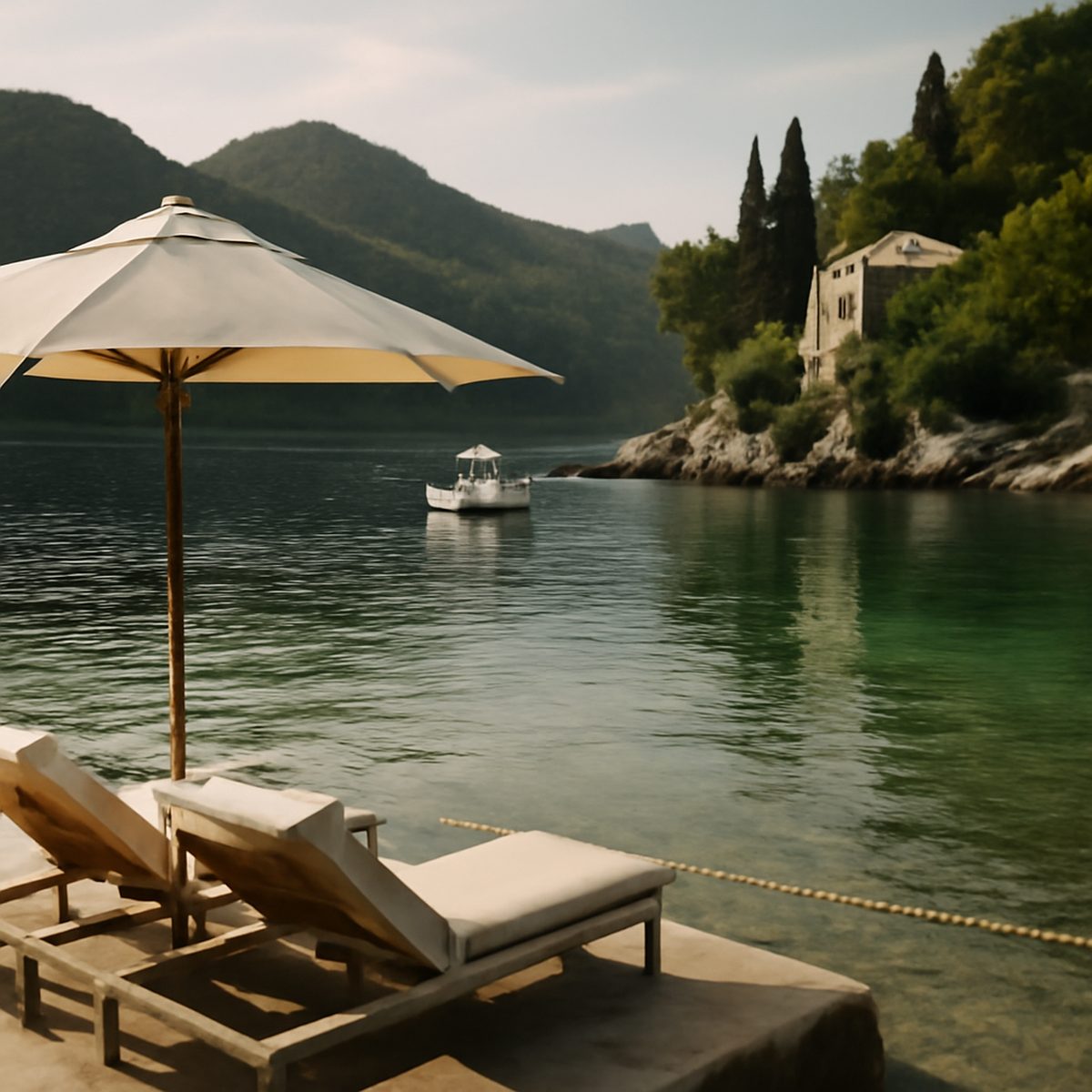
The ferry pulls away from the old harbour and within twenty minutes the noise of Dubrovnik falls behind like a dropped stitch. Ahead the Adriatic opens out, and low green islands rise from it, fringed with pine and edged with pale stone. These are the Elafiti, a small archipelago strung out just off the Dalmatian coast, and they keep a secret that the crowds a short boat ride away have not yet spoiled: on the inhabited ones, there are almost no cars. To arrive here is to feel the volume of the world turn down.
The Elafiti are not a resort. They are a handful of islands where people still fish and tend olives and vines, where the day is measured by the passing ferries and the fall of the light. For the traveller who wants the Adriatic without the throng, they are among the most restorative places in the region, and their quiet is the whole point.
Islands without cars
The great gift of the main Elafiti islands is their carlessness. On the largest inhabited ones there are no roads for traffic, only footpaths and stone lanes, so the soundscape is birdsong, cicadas and the sea rather than engines. You walk everywhere, or you don’t go, and that single constraint reorders a holiday. Distances shrink to what your legs will carry, plans soften, and the day fills instead with small discoveries: a shaded chapel, a fig tree heavy over a wall, a cove reached only on foot.
It is the same logic that makes so many of the best slow destinations feel restorative, the deliberate removal of the car, and it places the Elafiti in the company of the quiet places we celebrate throughout our Travel & Stays pages. If the pleasure of car-free islands appeals, our piece on the quiet islands of the Kvarner Gulf further up the Croatian coast makes a natural companion.
The rhythm of a day
A day in the Elafiti has a shape that sets itself. Mornings are for walking, before the sun climbs, along paths that thread between drystone walls and old olive terraces to a viewpoint or a hidden bay. The middle of the day belongs to the water and the shade, a long swim in impossibly clear sea followed by a slow lunch of grilled fish and island wine at a konoba by the harbour. Afternoons dissolve into a book, a nap, a second swim. Evenings are for the passeggiata of a small port, the fishing boats, the light going gold on the stone.
The Elafiti do not ask you to do anything, which is precisely why you come away feeling you have done a great deal.
There is a discipline to this kind of unstructured time that the modern traveller finds surprisingly hard, and surprisingly rewarding. The islands teach it gently, in much the way the destinations in our note on the quiet islands of the Bay of Kotor do a little further down the coast.
Stone, pine and water
The Elafiti are beautiful in a very particular register: green and white and blue. Pine and cypress cover the higher ground, olive and vine terrace the slopes, and everywhere there is pale limestone, in the walls, the chapels, the little harbours. The sea around them runs from turquoise in the shallows to deep ink offshore, clear enough to see the bottom far out. It is a landscape shaped by centuries of modest human work, and it wears that history lightly, in ruined summer palaces and old churches half-lost in greenery.
- Walk the spine of an island to a high chapel for the long view over the archipelago.
- Swim from the rocks rather than a beach, into water that stays clear and cool.
- Eat what the island grows and catches, simply cooked, at a family konoba by the water.
Where to stay and how to arrive
Accommodation on the Elafiti is deliberately modest: family guesthouses, a few small stone villas, the occasional low-key inn. There are no sprawling resorts, and that is the promise, not the shortfall. Staying overnight, rather than day-tripping from the mainland, is the whole trick, because the islands change utterly when the last ferry leaves and the day-visitors go with it. The evening quiet is what you came for.
Reach them by the local ferry from the mainland, a short and lovely crossing, and travel light, since you will carry your own bags along stone lanes. For the traveller who likes to string quiet places together, the Elafiti pair beautifully with a slow few days in a nearby coastal town, of the kind we describe in a slow weekend in Split, before or after the islands.
When to go
Season shapes the Elafiti as much as anything. High summer is warm and lovely but brings the most day-trippers and the busiest ferries, so the islands are at their most magical in the shoulder months, late spring and early autumn, when the sea is still swimmable, the light is soft and long, and the crowds have thinned to almost nothing. In those quieter weeks a walk along the island paths may not cross another soul for an hour, and the evenings settle into a deep, restful silence.
Avoid, if you can, the temptation to see all the islands in a single rushed day. The Elafiti reward staying put, choosing one island and letting it reveal itself slowly, rather than island-hopping against the ferry timetable. Give them three or four unhurried days and they will do far more for you than a fortnight spent racing between busier places ever could.
The Elafiti will not fill a busy itinerary or feed a hungry camera roll. What they offer instead is rarer: a few days in which the world runs at the pace of a ferry and the fall of the light, where the loudest sound is the sea, and where doing very little turns out to be the most memorable thing of all. In a region that has learned to sell its coast hard, these quiet green islands remember how to simply be, and they let you remember with them.
Marcus writes on travel and hospitality across Asia, and is happiest a long way from a lobby.