The Quiet Craft of the Perfect Laksa
How to make laksa the slow way, from a hand-pounded rempah to a glossy coconut broth carrying prawns, noodles and a generous spoonful of sambar chilli.
 By Renée Tan
2 September 2026 · 6 min read
By Renée Tan
2 September 2026 · 6 min read
There is a particular hush that falls over a kitchen when a pot of laksa is coming together. The extractor fan hums, the windows fog, and the whole flat begins to smell of dried prawns and toasted spice. It is not a dish you can hurry, and that is precisely its appeal. In a city that eats laksa standing up, at hawker counters and in food courts, there is a quiet luxury in making it slowly at home, tasting as you go, until the broth is exactly the colour of a Katong sunset.
Begin with the rempah, and mean it
Every good bowl starts with the spice paste. Dried chillies soaked until supple, shallots, garlic, galangal, lemongrass, candlenuts, belacan and a little turmeric for its warm ochre glow. You can blitz all this in a processor, and on a weeknight you should. But if you have the afternoon, reach for a granite mortar. Pounding rather than blending breaks the aromatics unevenly, releasing oils in a way a blade never quite manages. The paste comes out coarser, more fragrant, and somehow more yours.
The belacan wants toasting first, wrapped in foil and dry-fried until it perfumes the whole kitchen. It is a pungent, low-tide sort of smell that frightens the uninitiated and delights everyone else. Do not skip it; it is the backbone of the flavour, the thing that separates a laksa from a merely spicy coconut soup.
Frying the paste is where patience pays
Into a heavy pot goes a generous slick of oil, then the rempah, and here you simply wait. The paste must be fried on a patient medium heat until it darkens, splits and the oil rises around it in a rusty pool. This is called pecah minyak, and it is the single step most home cooks rush. Under-fried rempah tastes raw and grassy; properly cooked, it turns sweet, deep and almost jammy. Ten minutes of stirring, maybe fifteen, and your reward is a base that no shortcut can imitate. For a gentler project at the other end of the kitchen, the quiet craft of the perfect focaccia rewards a similar patience. Patience rewards cooks in other traditions too, and the quiet craft of the perfect gnocchi applies a similarly unhurried approach to a very different dish.
The same unhurried attention rewards the cook in other slow kitchen rituals, whether that is the long tending of a proper braise or the afternoon it takes to coax real depth from a homemade stock. Laksa belongs to that family of dishes that ask for your time and repay it with interest.
Stock, coconut and the question of balance
Once the paste is fried, the liquid goes in. A good laksa broth is built on stock, ideally one made from prawn shells and heads that you saved and roasted, their sweetness the counterpoint to all that chilli heat. Pour it in, let it simmer, and only near the end add the coconut milk. Add it too early and hold it at a rolling boil and it can split into an oily, grainy mess. Fold it in gently, keep the pot at a lazy tremble rather than a boil, and the broth stays glossy and whole.
Season with fish sauce and a little sugar, tasting constantly. This is the moment the dish reveals itself, and it is worth understanding how much heavy lifting fermented seasonings do here. If you have ever wondered how far fish sauce reaches beyond Thai cooking, a bowl of laksa is the answer: it is the salt, the umami and the quiet savoury hum beneath the spice.
A laksa is not seasoned at the end so much as coaxed towards balance the whole way through. You are chasing the point where heat, sweetness, salt and richness all arrive at once.
The bowl, assembled
Noodles are a matter of allegiance. Thick round rice vermicelli, sometimes cut short so the whole thing can be eaten with a spoon, is the Katong tradition. Others insist on a tangle of thin bee hoon and yellow noodles together. Blanch them, drain, and settle them into warmed bowls.
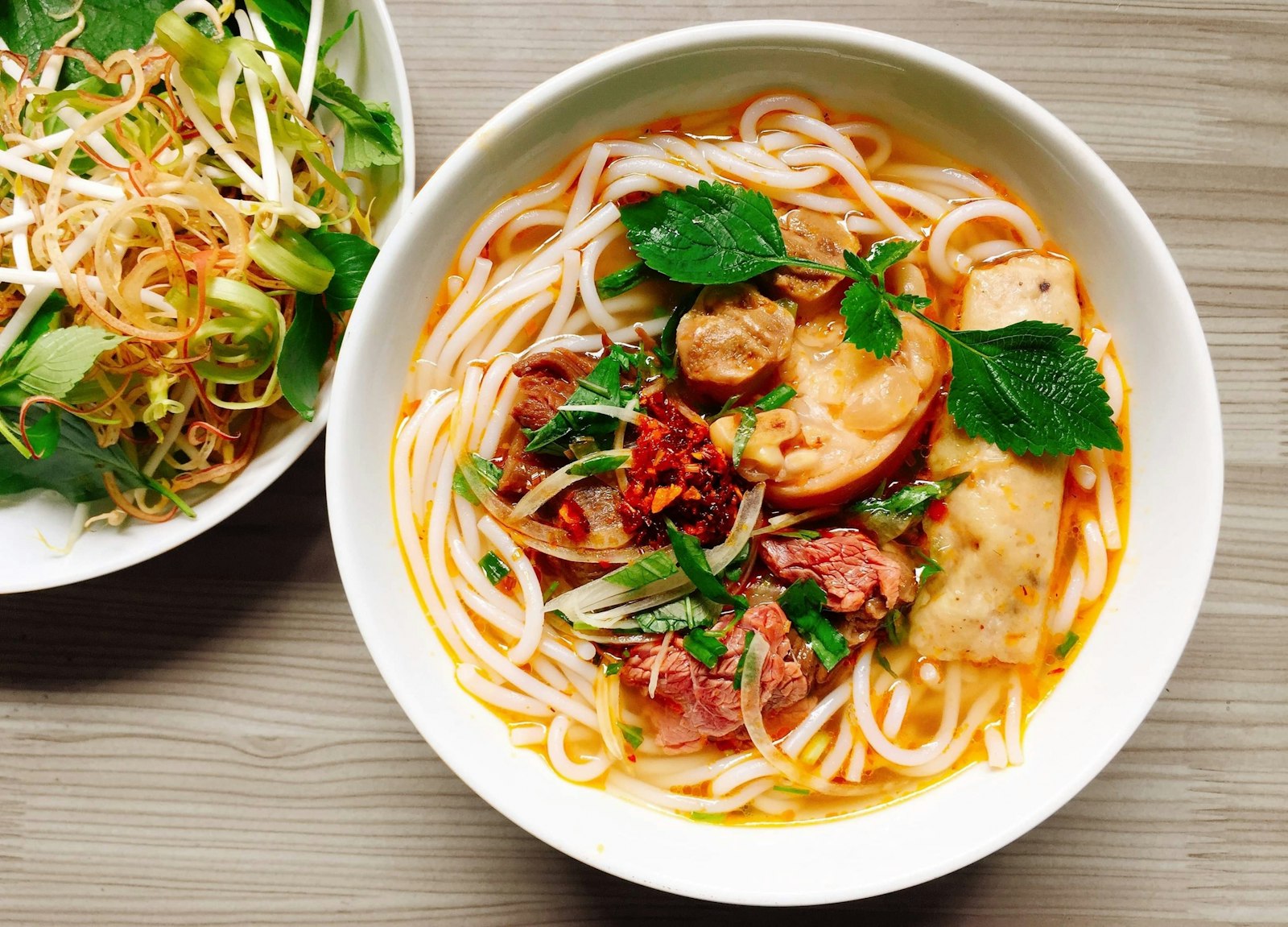
The garnishes matter as much as the broth. Poached prawns, peeled and halved. Cockles, if you are brave and they are fresh. Fried tofu puffs that drink up the soup. A handful of beansprouts for their squeak. Slices of fishcake. And always, always, a generous pinch of chopped laksa leaf, the daun kesum whose citrus-pepper scent gives the dish its name and its soul. A dollop of sambar chilli goes on the side for those who want to push the heat further.
The same instinct for a considered spread runs through the way Singaporeans build a bowl of yong tau foo, choosing each element with care. Laksa rewards the same eye: a bowl is only as good as the sum of its small, deliberate parts.
The question of heat, and of making it your own
Chilli in a laksa is not a single note but a whole chord, and where you strike it is a matter of taste. The dried chillies in the rempah bring a deep, fruity warmth rather than a sharp burn; the sambar on the side lets each diner push the heat as far as they dare. A Peranakan cook might lean sweeter and richer, heavy with coconut; a Sarawak version abandons coconut almost entirely for a fragrant, herbal, sambar-driven broth built on prawns and a different spice profile again. There is no single correct laksa, only the one that tastes right to you.
That is worth holding on to as you cook. Taste at every stage: after frying the rempah, after adding the stock, after folding in the coconut, after seasoning. Adjust the salt with fish sauce, the sweetness with a pinch of sugar, the richness with more or less coconut, the brightness with a final squeeze of lime. A laksa is not a fixed formula but a set of levers, and learning to pull them is the whole education. By your third pot you will have a version that is unmistakably yours, and you will never quite want the hawker’s again.
A dish worth doing badly first
Your first laksa may be too thick, or the coconut may catch, or the chilli may overwhelm the sweetness. That is fine. This is a dish you learn in your own kitchen, adjusting the ratio of stock to coconut, deciding how far to fry the paste, discovering exactly how much belacan your palate wants. Each pot teaches you something the last one did not.
What you are really making, over those unhurried hours, is a version of a dish that belongs to millions and yet becomes, in the doing, entirely your own. Serve it in generous bowls, put the sambar and extra laksa leaf on the table, and let people build their own. For a wider view of the pleasures worth cooking slowly, the Dining & Drinks pages are full of dishes that reward exactly this kind of patience. But start here, with the rempah, the pounding, and the fragrant, unrepeatable smell of a laksa coming right.
Renée has covered Singapore's restaurants for over a decade, with a soft spot for the kitchens most people walk past.