The Fragrances Worth Committing To
On the case for fewer, better bottles: how to test a fragrance properly, build a two-scent rotation, and let a signature scent do quiet, unhurried work.
 By Daniel Koh
29 August 2026 · 6 min read
By Daniel Koh
29 August 2026 · 6 min read
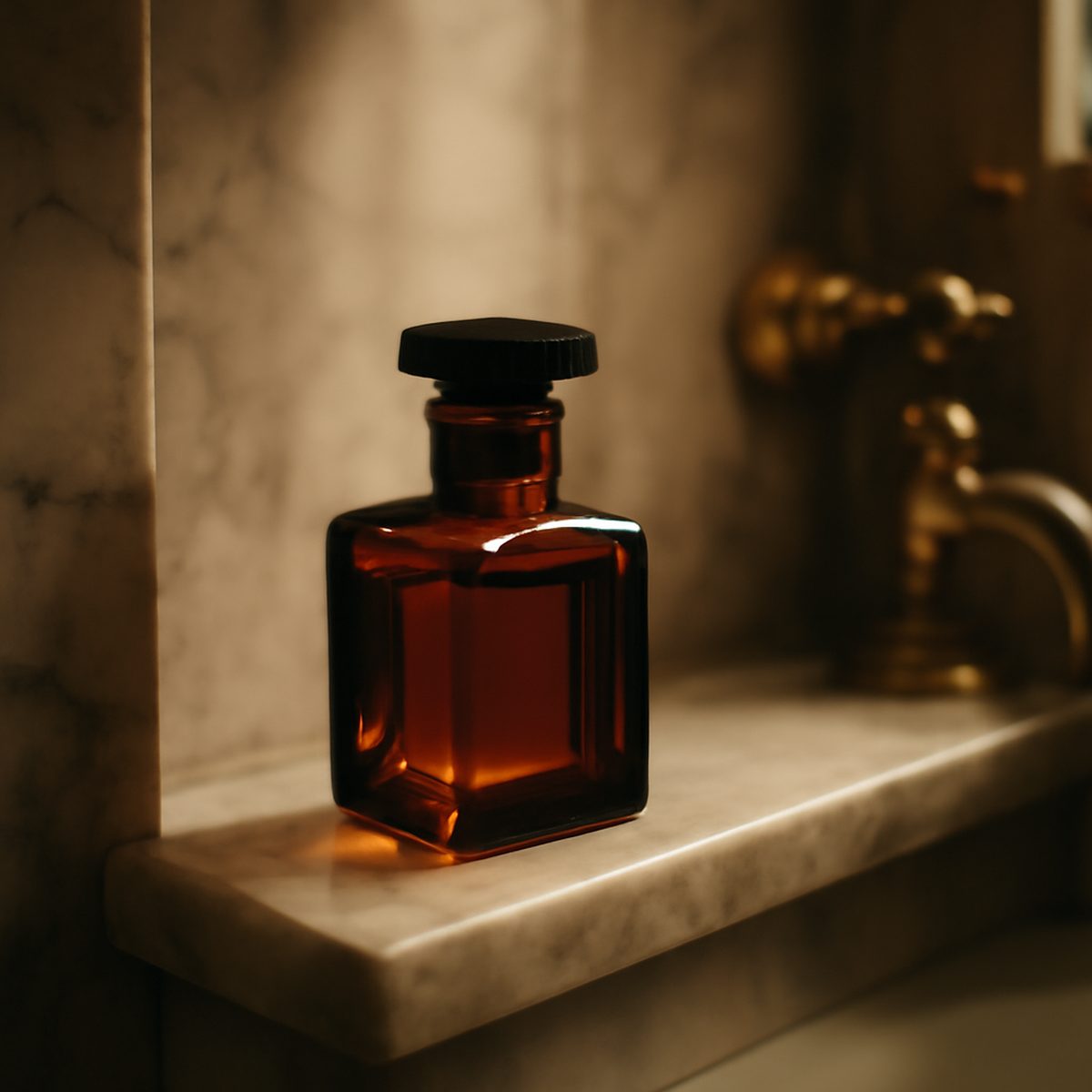
There is a particular kind of clutter that never announces itself as clutter: the fragrance shelf. It starts with one bottle, a gift or an impulse from a duty-free counter, and within a few years it has become a small glass city of half-used decants, each one promising a different version of yourself. Ask most men how many of those bottles they actually reach for and the honest answer is rarely more than two. The rest are furniture. This is the case for stopping the collecting and starting the committing.
Why a Signature Scent Still Matters
A wardrobe can be large because clothes are seen. A fragrance is different — it is noticed only by the people who stand close to you, which is precisely why it should be deliberate rather than accumulated. A scent worn for years becomes a kind of shorthand, the way a certain paper stock or a familiar voice can call up a person before you’ve placed why. That association cannot be built by rotating through a dozen bottles. It is built by wearing one thing often enough that it stops being a fragrance and starts being simply how a room remembers you were in it. The same logic of commitment applies to what a man wears, as our piece on the art of the signature accessory explores.
The Trap of the Collection
Fragrance houses have made an efficient business of convincing men that variety is sophistication — a scent for morning meetings, another for dinner, a third for the gym. In practice this produces the opposite of sophistication: a man who smells like whatever he grabbed that morning, indistinct even to himself. The more considered move, and the more expensive one in the short term, is to buy less and wear it more.
How to Actually Test a Fragrance
Almost no one tests fragrance correctly. The counter spray-and-sniff ritual tells you almost nothing, because top notes — the citrus, the aldehydes, the bright opening — burn off within twenty minutes and have little to do with how a scent will behave for the six hours that matter. The only honest test is to spray it on skin, leave the counter, and let it sit through a meal, a meeting, a walk in the heat. What remains after three hours — the base notes, the woods and musks and ambers — is the fragrance you are actually buying.
- Test on skin, never on paper alone — skin chemistry changes everything.
- Give it at least four hours before judging the dry-down.
- Test in the climate you’ll wear it in, not an air-conditioned counter.
- Never buy on the first wearing. Go home, sleep on it, return.
Building a Two-Scent Rotation for the Tropics
Singapore’s heat and humidity are unkind to fragrance in ways temperate climates are not. Heavy orientals and thick gourmands, glorious in a London winter, can turn cloying within an hour here. The considered approach is a rotation of exactly two: something bright and vetiver- or citrus-led for daytime and the office, and something with more depth — a leather, an incense, a warm amber — reserved for evenings, when air-conditioning and lower body heat let a heavier composition breathe properly. Two bottles, worn consistently, will do more for how you are remembered than twelve worn once each.
“I wore forty different scents in my twenties and none of them were mine,” says one Tanglin-based collector who has settled, after years of testing, on a single vetiver he now buys in the largest bottle available. “The scent I wear now, people mention it to me years later. That never happened when I was collecting.”
Where the Investment Actually Goes
A quietly excellent fragrance rewards spending in the same way a well-made shirt does — not through obvious luxury signalling but through longevity and consistency of the raw materials. Niche and independent houses, working with better concentrations of natural ingredients, tend to hold their shape through a humid evening in ways mass-market eau de toilette does not. This is not an argument for spending recklessly; it is an argument for spending once, on something in eau de parfum concentration, rather than repeatedly on something weaker that needs reapplying by lunch.
Application Matters More Than Most Men Realise
Even the right fragrance, chosen and tested properly, can be undone by careless application. Spraying directly onto clothing rather than skin robs a scent of the warmth it needs to develop through its stages, and rubbing wrists together after applying — an almost universal habit — actually breaks down the top notes prematurely through friction and heat. The better approach is to apply immediately after a shower, onto clean, slightly damp skin, at pulse points where body heat is highest: the inside of the wrists, the base of the throat, behind the ears. Two or three sprays is almost always enough for eau de parfum concentration; the instinct to reapply through the day is usually a sign of the wrong fragrance for the climate, not too little of it.
Storage plays a quieter but equally important role. Heat, light and humidity are a fragrance’s three real enemies, and a bathroom shelf — warm, damp, frequently sunlit — is close to the worst place a bottle can live. A cool, dark drawer or cabinet, away from a window, will keep a fragrance stable for years rather than months, preserving the exact balance the perfumer intended when it left the lab.
This same principle — fewer things, chosen properly, worn for years — runs through everything Black Cow tends to recommend, whether it’s a morning grooming routine stripped to its essentials or the case Black Cow has made elsewhere for a single exceptional coat over a rack of average ones. The instinct is the same: buy less, buy better, wear it until it is unmistakably yours.
The Discipline of Committing
Committing to a signature scent requires a kind of restraint that runs against the instinct to keep sampling. It means walking past the new seasonal release, resisting the seventh bottle, and trusting that consistency does more for how you present yourself than novelty ever will. This is, in the end, the same argument Black Cow has made about quiet luxury more broadly — that the most considered choices are rarely the loudest ones, and that real refinement shows up as restraint, repeated, until it becomes identity.
Visit any Style & Watches conversation on this site and you’ll find the same thread running through it: fewer, better, longer. A fragrance is simply the most intimate place to practise it. Choose two bottles this year, test them properly, and give yourself permission to stop looking for a third.
Daniel has spent fifteen years arguing that the best watch is the one you never take off.