The Case for the Wok Over the Frying Pan
A carbon steel wok is the most versatile pan most kitchens lack. The case for wok cooking over the frying pan, from stir-fries to steaming and deep-frying.
 By Renée Tan
1 September 2026 · 6 min read
By Renée Tan
1 September 2026 · 6 min read
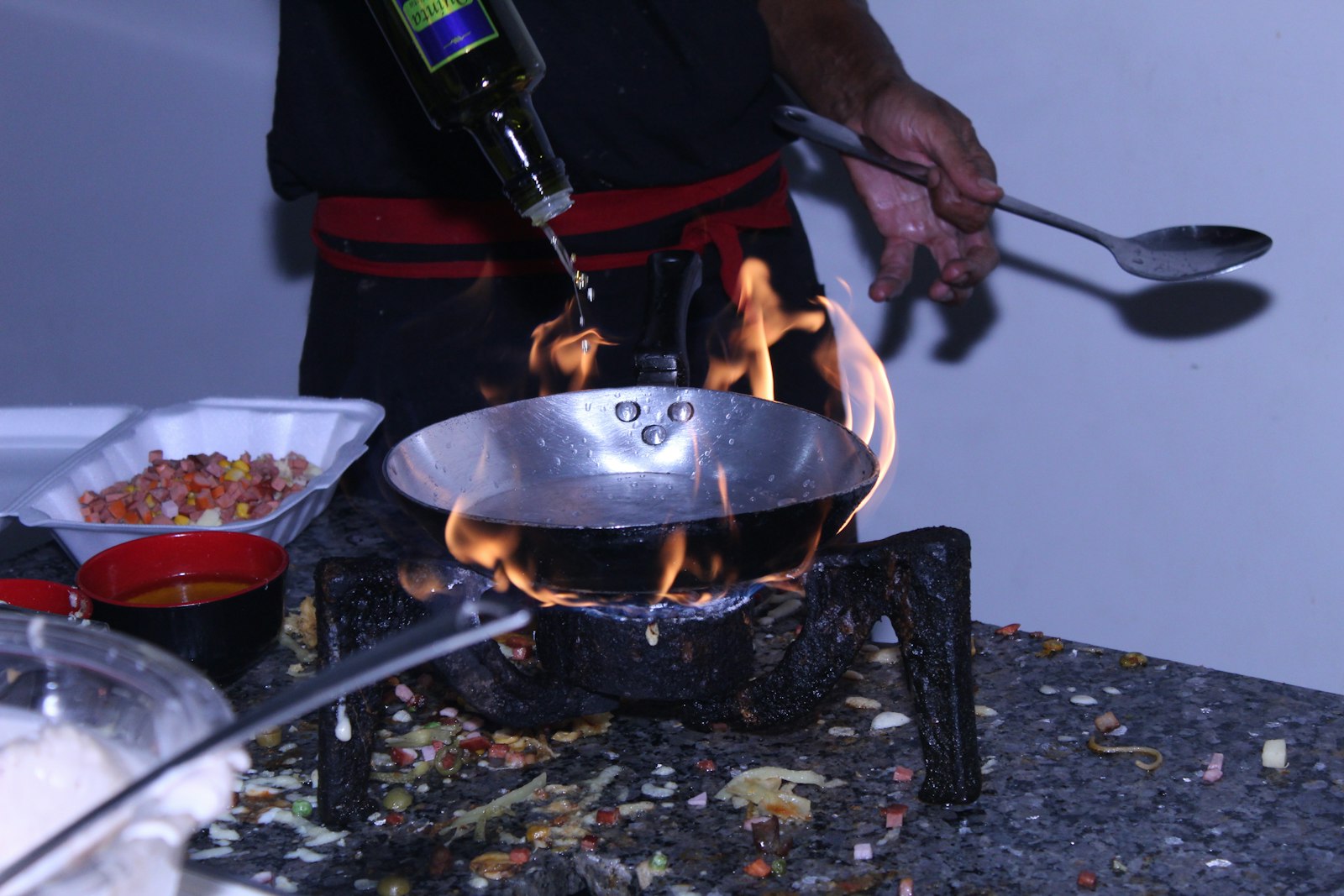
Ask most home cooks which single pan they would keep if they could keep only one, and they will say a frying pan or a saucepan. Ask a cook who grew up around a wok and the answer is different, and it comes without hesitation. A carbon steel wok is the most versatile vessel in the kitchen — a pan that stir-fries, steams, deep-fries, braises, smokes and sears, and does most of them better than the dedicated tool. The case for it over the humble frying pan is stronger than its Western reputation as a one-trick stir-fry pan suggests.
The shape is the whole argument
A frying pan is flat, which means it has one temperature zone and a limited surface. A wok is a bowl, and that geometry changes everything. The base sits in the fiercest heat while the sloping sides stay cooler, giving you a range of temperatures in a single pan. You can sear at the bottom and hold cooked food up the sides, out of the way. The curve also means a small amount of oil pools deep enough to deep-fry in, and food tossed up the walls falls back to the centre — which is what the constant tossing of a stir-fry is actually for. The shape is not tradition for its own sake; it is a solution to several problems at once. This is the same argument-from-form we make for the paella pan, whose wide, shallow shape exists for a specific reason too.
Why carbon steel
Buy a wok and you will face a choice of materials. Ignore the non-stick and the stainless; the answer is carbon steel. It is cheap, it heats fast and responds instantly to changes in the flame, and — crucially — it takes a seasoning. Over time and use, a carbon steel wok builds up a dark, slick, naturally non-stick patina that only improves. It is the same virtue that makes carbon steel and cast iron the connoisseur’s choice for a frying pan, as we argue in the case for the carbon steel pan and in why cast iron outlasts everything else. A well-seasoned wok is a pan that gets better the more you cook in it, which is the opposite of every non-stick pan you will ever throw away.
A stir-fry is not really a recipe; it is a technique. Get the pan hot enough, keep the food moving, and the ingredients almost cook themselves.
Wok cooking and the matter of heat
The one honest caveat is heat. The magic of a proper stir-fry — that faint smoky char the Cantonese call wok hei, the breath of the wok — comes from ferociously high heat that most domestic hobs struggle to reach. You can still cook wonderfully at home; you simply adjust. Cook in small batches so you do not crowd and cool the pan. Have everything prepped and lined up before you start, because there is no time to chop once the pan is hot — a discipline where good knife work earns its place, as our note on why a good knife changes everything makes clear. Get the pan smoking before the oil goes in, and keep the food moving.
Everything else a wok will do
The stir-fry is only the headline. Set a bamboo steamer inside a wok and you have the best steaming setup in the kitchen. Fill it a third with oil and you have a deep-fryer whose sloping sides use less oil than a straight pot. Its high sides make it the ideal pan for tossing and finishing pasta, for popping corn, for a quick braise, even for smoking small quantities of fish or duck over tea and rice. Once you have one seasoned and to hand, you find yourself reaching past the frying pan more often than not. The wok has a close relative in South Asian kitchens, and our case for the karahi pan considers the deep, rounded vessel built for curries and frying.
A short buyer’s note
- Go for carbon steel, hand-hammered or spun. A single long handle suits Western hobs; two loop handles suit steaming and heavier loads.
- Flat-bottomed for most home hobs. A round-bottomed wok needs a ring or a wok burner; a flat base sits stable on gas or induction.
- Season it before first use, and keep seasoning it. A new wok needs its factory coating burned off and a patina started; after that, every meal builds it.
Seasoning, and the long life of a wok
The one thing that intimidates newcomers to the carbon steel wok is the seasoning, and it should not. The process is simply the building of that dark, slick, protective patina, and it begins the moment you bring the pan home. A new wok arrives with a thin factory coating that must first be scrubbed off and burned away over high heat until the raw steel shows a blue-grey bloom. From then on, seasoning happens by cooking: a first oiling and heating to lay down the base layer, and after that, every fatty, high-heat meal you cook adds to it. Stir-fries, in particular, feed the patina beautifully.
Care is equally undramatic once you understand the principle, which is that the enemy is not water but neglect and harsh detergent. Rinse the hot wok with water and a soft brush or the gentle scrub of a bamboo whisk, wipe it dry, and — this is the only real rule — set it back over the heat for a moment to drive off every trace of moisture, then wipe a whisper of oil around the inside. Do that and rust will never trouble you. Skip the drying and it might. Avoid soaking it, avoid the dishwasher, and avoid scouring away the patina you have worked to build. Looked after this way, a carbon steel wok is very nearly immortal; the ones hanging in old kitchens, black and mirror-smooth from decades of use, are the pans their owners would run back into a fire to save.
One pan to lean on
None of this is an argument to throw away your frying pan. It is an argument that the wok deserves a place beside it, and that for a great many jobs it is quietly the better tool. It is cheap, near indestructible, improves with age and does the work of half a cupboard of specialised pans. For a way of cooking built on speed, freshness and high heat, nothing else comes close — and it is exactly the kind of considered, well-made kitchen kit our dining and drinks pages keep making the case for.
Renée has covered Singapore's restaurants for over a decade, with a soft spot for the kitchens most people walk past.