
The Best Sunglasses for Your Face Shape
Frame shape flatters or fights the face beneath it. Here is how to read your own proportions properly before you buy your very next pair of sunglasses.
 By Daniel Koh
30 August 2026 · 6 min read
By Daniel Koh
30 August 2026 · 6 min read
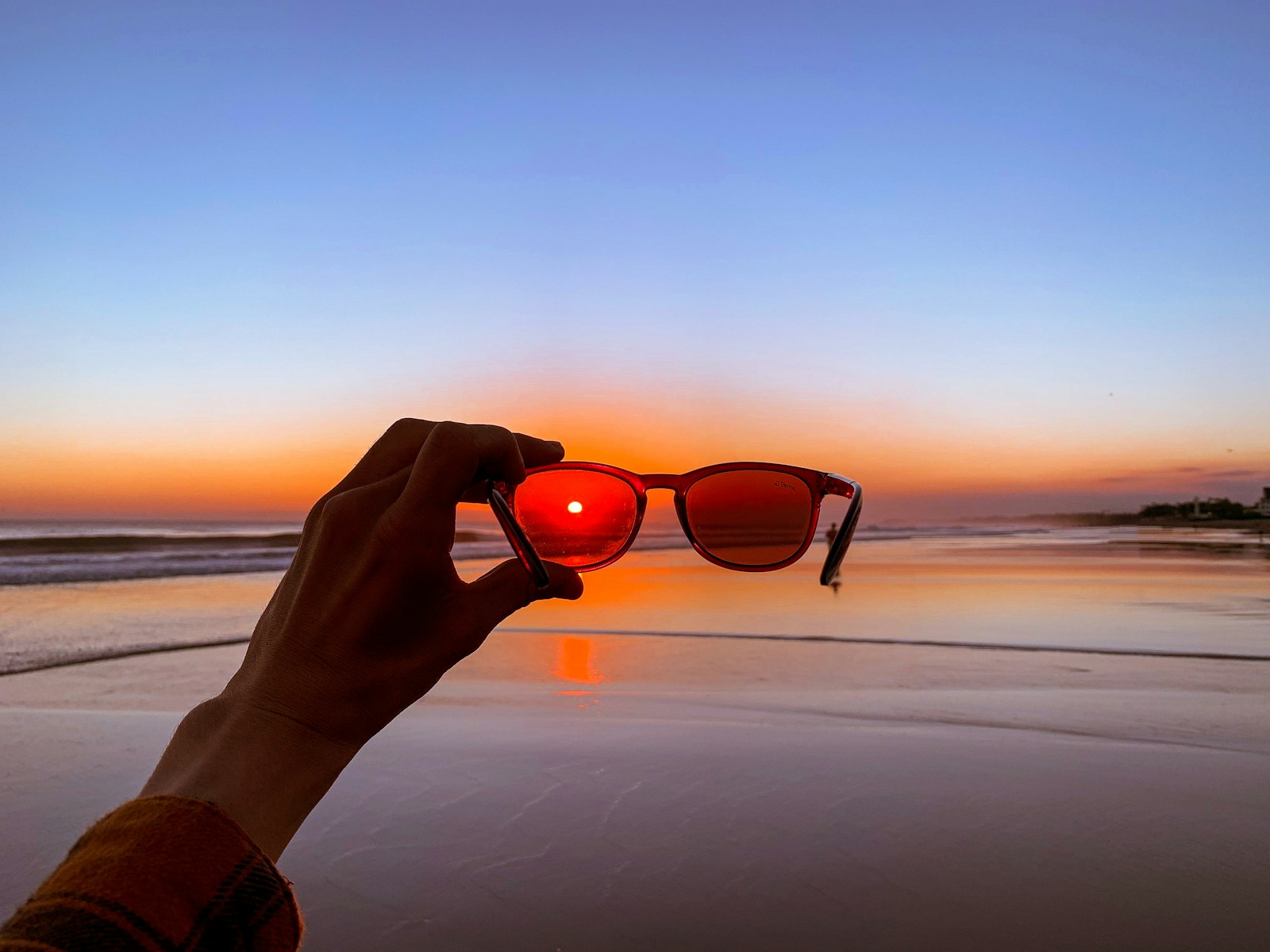
There is a particular kind of disappointment that comes from buying sunglasses on the strength of a single good photograph. The frame looked sharp on the model, sharper still in the campaign image shot at some improbable angle, and yet on your own face, in the unforgiving light of a shop mirror on Orchard Road, something is off. The proportions fight rather than flatter. This is not bad luck. It is the entirely predictable result of buying shape before understanding your own.
Sunglasses are one of the few accessories that sit directly on the architecture of the face, which means the usual rules of fashion — buy what you love, wear it with conviction — only get you halfway there. The other half is geometry, and geometry rewards a little homework.
Why Face Shape Matters More Than Trend
A trend cycles through in a season or two; a well-chosen pair of sunglasses, cared for properly, can last a decade or more. The two considerations sit in tension, and the sensible resolution is to let trend inform small details — a lens tint, a hardware finish — while letting face shape govern the fundamental decision of frame silhouette. Get the silhouette right and almost any reasonable colourway will work. Get it wrong and no amount of styling will rescue the pair.
The principle at work is contrast and balance. A face with soft, rounded lines generally benefits from a frame with more defined edges, and a face with strong angles is often softened by a rounder frame. It is the same logic a tailor applies to a jacket shoulder: the garment should complete the line of the body, not repeat it exactly, nor fight it outright. The same principle of completing rather than repeating the body’s line applies to outerwear, as the cocoon and egg-shape coat shows.
Reading Your Own Face Shape
Stand in front of a mirror, pull your hair back, and look honestly rather than critically. Most faces fall roughly into one of the following categories, though few of us are a textbook example of any single one.
- Oval — balanced proportions, slightly narrower at the jaw than the forehead. The most forgiving shape; almost any frame works, so indulge personal taste.
- Round — similar width and length, soft jawline, few sharp angles. Angular frames add definition.
- Square — a strong, wide jawline and forehead of similar width. Rounder or slightly oversized frames soften the line.
- Heart — a wider forehead tapering to a narrower chin. Frames with detail along the bottom edge, or a bottom-heavy shape, balance the taper.
- Long — more length than width, a longer nose or jaw. Wider frames with a strong horizontal line shorten the apparent length of the face.
A good optician will do this assessment for you in under a minute, and it is worth having done properly at least once, the way one submits to a proper shoe fitting rather than guessing a size forever after.
The Frame Shapes That Work Where
Within each face shape there is still a wide field of choice, and this is where personality earns its say. A round face suits a rectangular or wayfarer-style frame far more readily than it suits a perfectly circular one, which tends to echo the face’s roundness rather than counter it. A square jaw, by contrast, is flattered by an aviator or a soft cat-eye, both of which introduce a curve where the face offers none. Those with a rounder face who want more specific guidance may find our guide to sunglasses for round faces useful.
Oval faces are the exception that proves every rule, sitting comfortably in geometric, round, or aviator styles alike. If this is you, the more useful question becomes scale: a frame that is too small on a proportionally larger face reads as fussy, while one too large can overwhelm delicate features. As a rough guide, the frame’s outer edge should sit within the outer edge of the face, and the eyebrows should be roughly visible above or at the top of the lens.
A Note on Bridge and Temple Fit
Shape is only half the equation. A frame that slides down the nose or pinches at the temple will never feel considered, however flattering the silhouette. Acetate frames can usually be adjusted at the temple by a good optician; metal frames with adjustable nose pads offer more forgiveness for narrower or higher bridges, which are common among many Singaporean faces and worth mentioning specifically when being fitted.
Lens Colour and Coating, Briefly
Once shape is settled, lens tint is the next lever, and a far more forgiving one. Grey and green-grey lenses render colour most accurately and suit almost any skin tone or setting, from a lunch on the water to a walk through the Botanic Gardens. Brown and amber tones warm the light and flatter warmer skin undertones, while also softening bright equatorial glare rather effectively. Mirrored coatings look striking but are best reserved for a second or third pair, since they can read as costume rather than accessory in the wrong setting.
“The frame should disappear into the face. If a stranger remembers the sunglasses before they remember you, something has gone wrong,” says one veteran optician who has fitted three generations of the same Singapore families.
Building a Considered Two-Pair Wardrobe
Few people need more than two well-chosen pairs: one neutral and versatile enough for daily wear, and one with slightly more character for evenings or travel. This mirrors the logic behind a considered capsule wardrobe, where a small number of correctly chosen pieces outperforms a drawer full of near-misses. Treat the first pair as an investment purchase, fitted properly and built to be repaired rather than replaced, in the spirit of pieces covered in our guide to sunglasses worth keeping for a decade.
The second pair can afford to take more risks — a bolder tortoiseshell, a coloured lens, a shape slightly outside your safe zone — precisely because the first pair has already done the sensible, flattering work. For more on how eyewear fits into a broader personal style, our piece on the art of choosing eyewear is worth reading alongside this one, and our Style & Watches section covers the rest of the wardrobe with the same attention to fit over fashion.
In the end, the best pair of sunglasses is the one you forget you are wearing, because it was chosen for your face rather than for the campaign it appeared in. That takes ten minutes in front of a mirror, and a willingness to walk past whatever is loudest in the shop window.
Daniel has spent fifteen years arguing that the best watch is the one you never take off.


