The Best Restaurants for Solo Dining
Dining alone should never feel like a compromise. Here are the Singapore restaurants, mostly built around counters, that make a table for one feel intentional.
 By Renée Tan
30 August 2026 · 6 min read
By Renée Tan
30 August 2026 · 6 min read

Dining alone still carries an odd stigma in many cities, treated as either a sad compromise or a furtive, head-down affair best finished quickly. Singapore, refreshingly, has never fully bought into that framing — a legacy, perhaps, of hawker culture, where eating solo at a communal table has always been entirely unremarkable. That comfort with solitary eating has extended into the city’s more considered restaurant scene too, where a genuine and growing number of venues now treat a table for one as an opportunity rather than an inconvenience to be managed.
Why counter seating changes everything
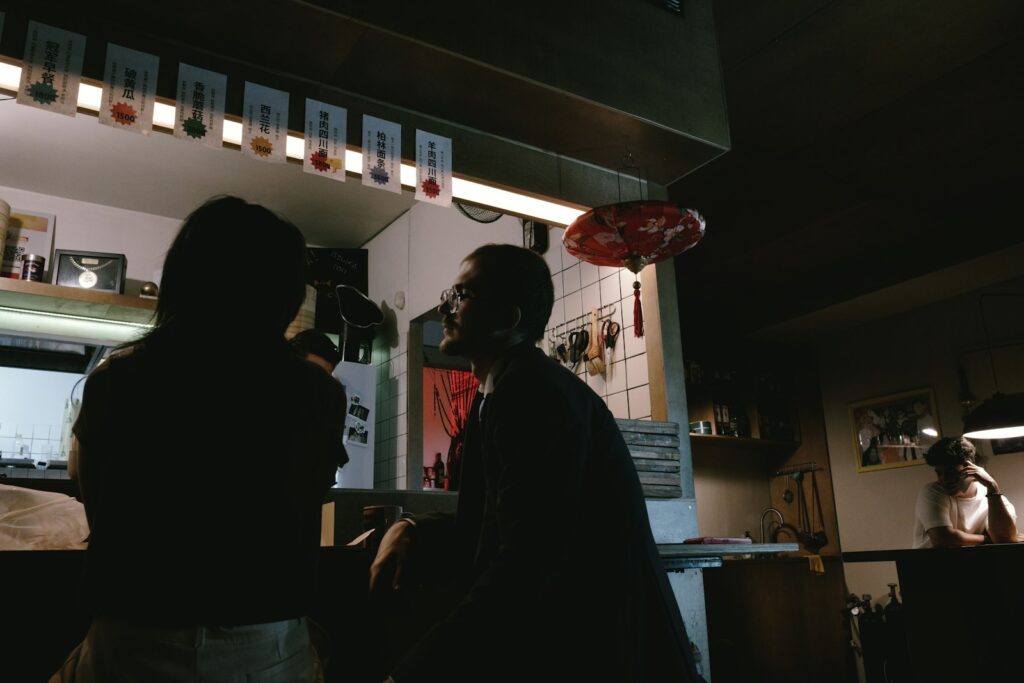
The single biggest factor separating a restaurant that welcomes solo diners from one that merely tolerates them is counter seating. A well-designed counter, facing an open kitchen or a bar, gives a solo diner something to watch and something to focus their attention on without needing conversation to fill the silence. This is precisely why sushi counters, robatayaki grills and open-kitchen restaurants tend to be so naturally suited to eating alone — the theatre of the kitchen itself becomes the evening’s entertainment, and there is rarely any sense of an empty chair across the table drawing attention to a solo booking.
Service that reads the room correctly
Good solo-dining service is a specific skill, distinct from service for a couple or a larger group. It means checking in at a comfortable pace without excessive hovering, offering wine by the glass or a considered pairing rather than pushing a full bottle a single diner cannot finish, and generally reading whether a guest wants brief conversation or simply wants to eat in peace. Restaurants that get this right rarely advertise it explicitly, but it shows in small moments — a recommendation offered without being asked, a wine poured in a smaller measure without comment, a genuine lack of pity in how the booking is handled from the moment a reservation for one is made.
“I used to feel like I had to explain myself, eating alone,” one regular solo diner told us. “The good places never made me feel like I owed anyone an explanation.”
Formats that suit solo dining particularly well
Beyond counter seating, certain dining formats simply lend themselves more naturally to a table for one. Cocktail omakase, discussed in the best cocktail omakase and bar menus, works beautifully solo since the format is built entirely around a one-on-one conversation with the bartender rather than group dynamics. Robatayaki counters, covered in the best robatayaki and grilled meats, offer similar appeal, the grill itself providing enough visual interest to make solo dining feel entirely natural rather than something to hurry through. Even a properly run cha chaan teng, explored in the best cha chaan teng and HK cafes, suits solo eating well, its fast, unpretentious rhythm never making a single diner feel conspicuous.
What to look for when booking
- Counter or bar seating available, ideally facing an open kitchen or active preparation area
- A wine list offering a genuine range by the glass, not just a token two or three options
- Reviews or reputation suggesting the restaurant is comfortable with smaller bookings generally
- A pace of service that allows lingering without feeling rushed toward the door
The particular pleasure of eating well alone
There is a specific, underrated pleasure to a good solo meal that a group dinner simply cannot replicate — the ability to focus entirely on the food and the room, without the social choreography of a shared table pulling attention elsewhere. Conversations with staff tend to be more genuine, since there is no group dynamic to navigate around, and the pacing of the meal becomes entirely one’s own, lingering over a course that deserves it or moving briskly through one that does not warrant extra time. This mirrors, in its own smaller way, the appeal explored in the art of the solo luxury trip, where travelling alone opens up a similar kind of unhurried attentiveness that group travel rarely allows.
Making a reservation without overthinking it
Booking a table for one still carries an odd residual anxiety for many people, a lingering worry that the request itself will draw attention or require some kind of justification. In practice, the restaurants worth visiting solo rarely register a booking for one as unusual at all, and the small fear of an awkward moment at the host stand almost always turns out to be worse in anticipation than in reality. A simple, direct booking — a table for one, at a stated time — is all that is required, and any restaurant that makes this feel complicated is probably not one worth returning to regardless of party size.
Bringing something to occupy the in-between moments
Even the best solo dining experience has natural lulls — between courses, while a drink is being poured, in the quiet minutes before the next dish arrives. A book, rather than a phone, tends to suit the atmosphere of a considered restaurant far better, and many solo diners find that alternating between genuine attention to the meal and a few pages of reading creates a rhythm that feels neither rushed nor awkwardly empty. This is a matter of personal preference rather than any fixed rule, but it is worth thinking about before arriving, since scrambling for something to do between courses is usually what makes a solo meal feel uncomfortable rather than the solitude itself.
A quiet but genuine shift
What is most encouraging about Singapore’s solo dining scene is how unremarkable it has become at the restaurants doing it well — no special menu, no separate seating area, simply good service extended equally to a table of one as to a table of four. Within Singapore’s wider dining and drinks landscape, this shift reflects a broader maturity in how the city’s restaurants think about hospitality generally, treating attentiveness as a constant rather than something calibrated to party size. Worth seeking out, and worth booking without a second thought about whether a table for one needs any justification at all, because increasingly, at the restaurants that matter, it simply does not.
Renée has covered Singapore's restaurants for over a decade, with a soft spot for the kitchens most people walk past.