The Best Ngoh Hiang and Fried Snacks
Ngoh hiang rewards patience: a five-spice pork and prawn roll wrapped in beancurd skin, fried to order, served with a sauce that ought to sting a little.
 By Renée Tan
31 August 2026 · 6 min read
By Renée Tan
31 August 2026 · 6 min read
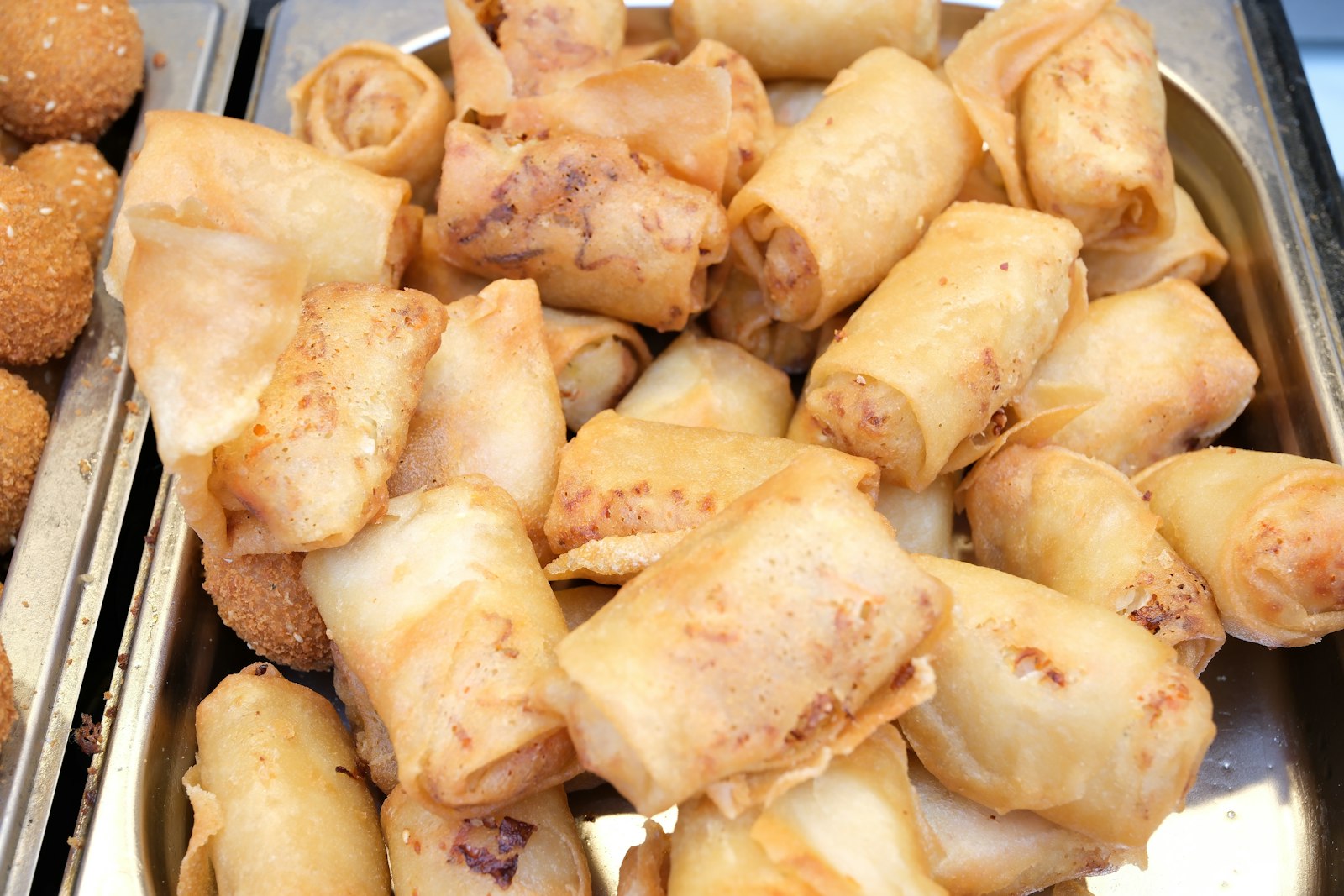
There is a particular sound that tells you a ngoh hiang stall is worth the queue: the low, steady hiss of oil that has not been rushed, and the dry crack of a knife through a roll that has just come out of it. Ngoh hiang — sometimes lor bak, depending on which end of the island your family is from — is one of those dishes that looks humble on a laminated menu and turns out, on the plate, to be a small act of craft. Minced pork, prawn, water chestnut and five-spice powder, bound and rolled in a sheet of beancurd skin so thin it is closer to paper than pastry, then fried until the wrapper blisters and the filling steams inside its own little parcel. Cut into coins, it arrives with a wedge of cucumber, a smear of chilli, and usually a pot of sweet-and-sour sauce that is either genuinely house-made or, more often now, quietly decanted from a bottle. You can tell which within a bite.
What Separates the Ordinary from the Exceptional
The tell is in the wrapper. A beancurd skin fried too long turns brittle and bitter, shattering into shards that fight the filling rather than cradling it. Fried too briefly, it goes soft and oily, more like a limp pancake than a shell. The best versions — and we mean this literally, the ones worth crossing a car park for — hold a faint chew at the seam, a crispness on the flat, and a filling that is seasoned with restraint rather than announced with white pepper. Composite stalls we return to, tucked into the corners of older coffee shops in the east, fry each order fresh rather than holding a tray under a heat lamp, and that single decision separates a memorable plate from a forgettable one more than any recipe could.
Five-spice is the other variable. Too much, and the dish tastes like a spice cabinet; too little, and you may as well be eating a plain meatball. The good stalls use a blend that leans slightly toward star anise and cinnamon rather than clove, which reads as warmer and less medicinal on the palate, and they season the mince the night before so the spice has time to settle into the meat rather than sit on top of it.
The Extended Family of Fried Snacks
Ngoh hiang rarely travels alone. It belongs to a wider constellation of fried hawker snacks that Singaporeans graze on rather than sit down to, and the best stalls tend to do several of them well at once. Prawn fritters — whole prawns dipped in a yam-and-flour batter and fried until the shell crisps — sit at one end of the counter; ngoh hiang and its cousin, the beancurd-wrapped yam roll, at the other. Between them you will often find fried beancurd skin itself, plain and unfilled, served as a textural counterpoint, along with otah grilled rather than fried, which some stalls stock simply because the customers ask for it in the same breath.
If you are building a proper spread rather than a solo snack, it is worth pairing ngoh hiang with something from the stalls doing serious popiah and kueh, since the two counters often sit within a few doors of each other in the older markets, and the textures — one fried and firm, one soft and fresh-wrapped — complement rather than compete.
How to Order Like a Regular
- Ask for it freshly fried rather than from the tray — most stalls will do this without complaint if you are not in a rush.
- Request the sauce on the side if you plan to eat more than a few pieces; drenched, the wrapper loses its crispness within minutes.
- Order in even numbers if sharing — the rolls are usually cut into two or three coins, and portions divide more cleanly.
- Go mid-afternoon rather than at the lunch crush; the oil is fresher and the queue shorter.
A Dish With Deeper Roots
Ngoh hiang’s lineage traces to Hokkien and Teochew kitchens, where wrapping minced meat in beancurd skin was as much about thrift as flavour — a way to stretch a modest amount of pork and prawn into something substantial, using an ingredient that would otherwise be discarded trim from tofu-making. That thriftiness has, over decades, become the point rather than the excuse: the beancurd skin is now sought after specifically for the way it fries, and stalls that use a thicker, cheaper substitute are noticeably worse for it. It is worth noting, too, how the dish sits within the wider story of local sweet and savoury snacks that Singapore has quietly protected even as its hawker landscape consolidates; the parallel history of kueh and sweet hawker fare follows much the same arc, from thrift to craft to something worth actively seeking out.
“You can always tell a stall that respects the dish,” one long-time hawker told us, “because they still make the sauce themselves. Everything else can be shortcut. Not that.”
What makes ngoh hiang worth writing about at all — rather than simply eating — is that it resists the trend toward spectacle that has crept into so much of Singapore’s food culture. There is no plating flourish, no reduction, no foam. It is judged entirely on whether the person frying it that morning cared enough to get the timing right, and that makes it a useful barometer for a stall’s standards more broadly. If the ngoh hiang is good, the rest of the counter usually is too.
Finding the Good Stalls
The reliable approach is to follow the queue of older uncles and aunties rather than the one with the longest Instagram trail; ngoh hiang has not, mercifully, become a destination dish in the way that certain noodle bowls have, which means the stalls doing it best are often still doing it for a neighbourhood rather than an audience. Look for a fryer that is being tended rather than left, a chilli sauce that has visible texture rather than gloss, and a queue that moves in the unhurried rhythm of people who know exactly what they are waiting for. For a wider sense of where Singapore’s hawker culture is holding its ground against the pressures of rent and rising costs, our running list of the stalls worth queuing for is a useful companion, and it is a subject this magazine returns to often within Dining & Drinks, because these small, unglamorous dishes are, in our view, where Singapore’s food culture is most honestly itself.
Eat it standing at the counter if you can, still warm enough to fog the plastic bag it would otherwise be packed into, with the chilli on the side and no cutlery beyond your fingers. That, more than any tasting menu, is where the dish makes its case.
Renée has covered Singapore's restaurants for over a decade, with a soft spot for the kitchens most people walk past.