
The Best Modernist and Architectural Hotels
The best architectural hotels treat the building itself as the destination, letting concrete, light and proportion do what a spa menu never quite can.
 By Marcus Lim
31 August 2026 · 6 min read
By Marcus Lim
31 August 2026 · 6 min read
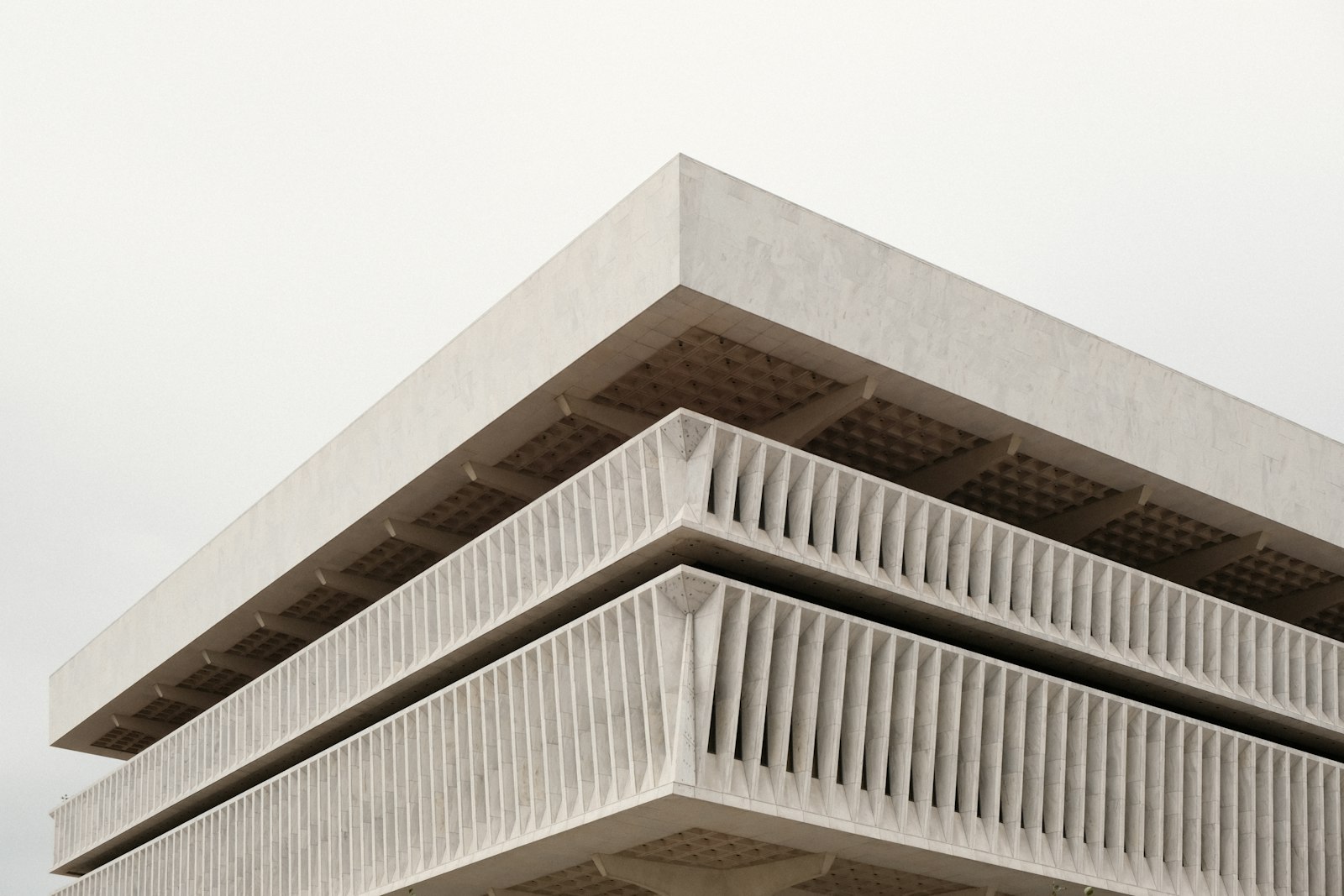
There is a certain kind of hotel that announces itself before you have even checked in — not through a grand lobby or an oversized flower arrangement, but through the quality of light falling across a poured-concrete wall, or the way a corridor is angled to catch a sea breeze without ever needing air-conditioning. Modernist and architect-led hotels are a minority pursuit within hospitality, built by owners who cared more about proportion than about a fifth star, and finding them takes a slightly different kind of research than the usual luxury shortlist.
What Makes a Hotel Architectural, Rather Than Just Handsome
The distinction matters. Plenty of hotels are beautifully decorated without being architecturally serious — the difference lies in whether the building’s structure and the guest experience are the same conversation. In a genuinely architect-led property, the walls, the light, the circulation between spaces and the material palette are doing the work that decoration usually does elsewhere. Board-formed concrete left exposed rather than painted over. Corridors that double back on themselves to control views rather than simply connect two points. Rooms where the ceiling height changes deliberately from entry to bed, compressing and releasing the sense of space. These are buildings that reward slow attention — the kind you only really pay once you have unpacked and stopped looking at your phone.
The Brutalist Strand
A handful of Asian properties draw directly from the mid-century brutalist tradition — heavy, sculptural, unapologetically concrete, but softened by tropical planting that grows over and through the structure rather than around it. These hotels tend to divide guests sharply: some find the raw material cold, others find it the only honest response to a hot climate, since thick concrete keeps interiors cool without excessive mechanical cooling. The best examples pair the material with deliberately restrained furnishing — teak, rattan, linen — so the architecture is never fighting the interiors for attention. A well-run property in this vein rewards a stay of several nights rather than one; the building genuinely reads differently in morning and evening light.
The Timber and Pavilion School
At the softer end of the same movement sit hotels built from timber and thatch, working in dialogue with vernacular building traditions rather than importing an entirely foreign vocabulary. A bamboo pavilion in Bali, engineered with the same structural seriousness as a concert hall, or a stilted longhouse reinterpreted with modern joinery and glazing, both belong to this strand. These properties tend to sit low in the landscape rather than dominate it, and the best of them were designed by architects who spent as long studying the site’s wind patterns and rainfall as they did sketching elevations. Our piece on the best garden and estate hotels covers a related, slightly gentler category for travellers who want architecture in conversation with planting rather than in opposition to it.
A Short List of What to Look For
- Named architects or studios credited on the property’s own materials, rather than an anonymous design-and-build firm
- Passive cooling strategies — deep eaves, cross-ventilation, thermal mass — rather than reliance on air-conditioning alone
- A restrained material palette repeated consistently from lobby to room
- Site-specific design rather than a template rolled out across a chain
City Properties Worth the Detour
Urban architectural hotels operate under tighter constraints — plot size, height limits, neighbouring buildings — and the best of them turn those constraints into the design’s central idea rather than fighting them. A hotel wrapped around a narrow lightwell, using it to draw daylight down through six or seven floors, can feel more inventive than a sprawling resort with unlimited land. Kyoto in particular rewards travellers who look past the obvious temple-adjacent stays; our design lover’s guide to Kyoto maps several architect-led properties tucked into the city’s older districts, where contemporary interventions sit deliberately close to centuries-old townhouses.
“We didn’t want the building to compete with the mountain behind it,” an architect once explained of a low-slung concrete lodge she had designed, “so every long line in the plan points toward the ridge. You don’t notice consciously. You just feel calmer.”
Planning a Trip Around Design
The practical challenge with architectural hotels is that the best rooms — the ones with the clearest sightlines, the most dramatic ceiling heights, the private access to a garden court — are often not the most expensive category, and staff will not always volunteer which room that is unless asked directly. It is worth writing ahead, explaining the interest in the building specifically, and asking which room the architect themselves would choose. Most well-run properties are proud enough of their design to answer honestly. For travellers assembling a wider design-focused itinerary, our Travel & Stays section and our related piece on the return of the seaside grand hotel both offer useful counterpoints — proof that considered architecture spans eras as easily as it spans continents.
What unites the best of these properties, brutalist or timber, urban or remote, is a refusal to let comfort and design be separate conversations. A truly considered building makes you comfortable through its structure, not despite it — and once you have stayed in one, ordinary hotels start to feel like they are simply decorating around a problem they never bothered to solve.
A Note on Restoration Projects
A growing number of the most interesting architectural stays are not new builds at all, but careful restorations of mid-century structures that had fallen into disrepair — a former civic building, a disused seaside pavilion, an abandoned modernist villa reclaimed from decades of tropical growth. These projects carry a different weight than a ground-up commission: the architect is in dialogue with a previous generation’s ideas rather than starting from a blank site, and the best restorations are honest about that conversation, leaving visible seams between old structure and new intervention rather than smoothing everything into a seamless whole. Staying in one of these properties can feel almost archival, as though the building itself is the primary exhibit and the room is simply where you happen to be standing to view it.
For travellers who find this kind of research rewarding, it is worth building extra time into the itinerary simply to walk the property slowly, ideally with a staff member willing to talk through the renovation’s decisions. Few luxury experiences offer as much to think about per square metre as a well-restored piece of modernist architecture — and unlike a spa treatment or a tasting menu, the memory of a truly considered building tends to sharpen with distance rather than fade.
Marcus writes on travel and hospitality across Asia, and is happiest a long way from a lobby.


