
The Best Materials for a Statement Bathroom
A statement bathroom is built on restraint, not excess. Here is how to choose stone, tile and metal that age well and feel considered together.
 By Priya Nair
30 August 2026 · 6 min read
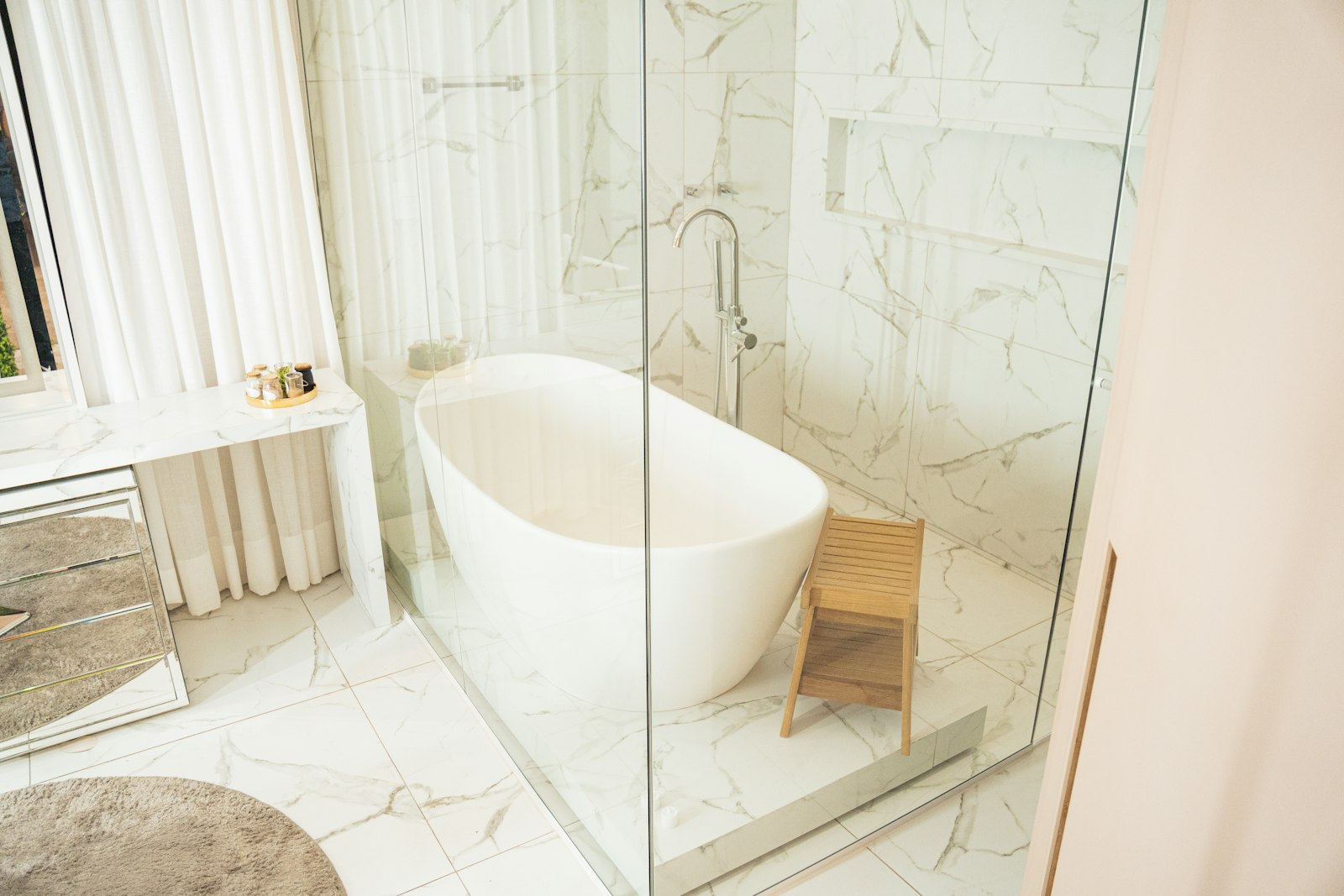
The phrase “statement bathroom” tends to conjure something loud — a wall of pattern, a single dramatic slab, a colour choice that dates within a decade. The better statement bathrooms, the ones that still feel considered ten years after the tiler leaves, are built on the opposite instinct: one or two genuinely good materials, chosen with real care and then largely left alone to do the work. A bathroom is a small, enclosed room seen daily at close range, in strong light and in low light, wet and dry, which means material choices get tested more thoroughly here than almost anywhere else in a home.
Stone Sets the Tone
Natural stone remains the single most transformative material a statement bathroom can carry, but not all stone behaves the same way in a wet room. Marble is prized for its veining and the way it catches light, yet it is porous and can etch when it meets acidic products, which means it demands a proper sealant regime and a degree of tolerance for character marks over time. Quartzite offers a similar visual richness with considerably better resistance to staining and etching, making it the more forgiving choice for a bathroom used daily rather than admired occasionally. Limestone and travertine bring warmth and softness that marble cannot quite match, though both need careful sealing in a genuinely wet climate. Whichever stone is chosen, using it in one dominant application — a full feature wall, or a single continuous vanity run — reads as far more considered than scattering small amounts of several different stones around the same room.
Tile as the Supporting Material
Where stone is used sparingly, tile does the bulk of the practical work, and large-format tile in particular has become the quiet standard for a considered bathroom. Fewer grout lines mean less visual clutter and less maintenance, and a large-format porcelain tile can convincingly mimic natural stone at a fraction of the cost and with none of the sealing requirements. Anyone weighing tile against stone more broadly should read the wider comparison in how to choose bathroom tiles, which covers the practical trade-offs between porcelain, ceramic and natural stone tile in far more technical detail than fits here. Zellige and other handmade tiles bring texture and gentle imperfection that factory-perfect tile cannot replicate, and they work particularly well as an accent rather than covering an entire room, where their irregularity can start to look unintentional rather than characterful.
A Sensible Material Hierarchy
- One hero material — a stone slab or feature tile wall — chosen for maximum visual impact
- One supporting material — large-format tile or plaster — covering the majority of the room quietly
- One metal finish, used consistently across all tapware and hardware
- Timber or cane accents used sparingly, and always properly sealed for humidity
Metal Finishes Tie Everything Together
Tapware finish is the detail most likely to be chosen last and regretted first. Brushed brass and unlacquered brass have become the default warm-metal choice for good reason — they develop a living patina over years of use rather than looking simply worn, which suits the considered, unhurried aesthetic a statement bathroom is usually after. Matte black remains a strong, versatile alternative that reads well against almost any stone or tile background, though it can show water spots more visibly than brushed finishes. Whatever metal is chosen, consistency matters more than the specific tone: mixing chrome taps with brass hardware and nickel fittings in the same room reads as unplanned rather than eclectic, and it is one of the most common and easily avoided mistakes in bathroom design.
A bathroom should feel like the calmest room in the house, not the loudest. — a Singapore interior designer, speaking on residential projects generally
Considering the Whole Wet Room
Material choices in a statement bathroom cannot be made in isolation from the rest of the wet room’s fittings. The vanity, the shower enclosure and the tub all interact visually and practically with whatever stone or tile surrounds them, and it is worth reading the companion guide on choosing the right bathroom vanity before finalising a material palette, since vanity choice often determines how much of the feature stone is actually visible day to day. In Singapore’s climate specifically, humidity and heat accelerate the wear on natural materials considerably faster than in temperate countries, which makes proper ventilation and sealing every bit as important as the material selection itself — a beautiful stone wall that develops mould within a humid enclosed shower has failed regardless of how well it was chosen.
A genuinely considered statement bathroom takes patience: choosing fewer materials, choosing them well, and resisting the temptation to add one more feature simply because the budget allows it. The result is a room that photographs beautifully on day one and still feels right a decade later, which is the only real test that matters. For more on material choices across the home, the wider Homes & Culture section covers the same thinking room by room.
Lighting Reveals What Materials Alone Cannot
Even the best-chosen stone or tile will fall flat under the wrong lighting, and this is a detail that often gets finalised too late in a bathroom renovation, after the material budget has already been spent. Veined stone rewards raking light from the side, which brings out its texture and depth in a way that flat overhead lighting simply cannot. Warm-toned bulbs, in the range that reads as inviting rather than clinical, flatter natural stone and brass fittings far better than the cool, bright light often installed by default in wet rooms for practical visibility. A dimmable circuit, kept separate from the practical vanity lighting used for grooming, allows the room to shift convincingly between a bright, functional morning mode and a calmer, more atmospheric evening one — the difference between a bathroom that merely photographs well and one that is genuinely pleasant to spend time in.
Budgeting for Longevity Rather Than Just Impact
The most expensive material in a statement bathroom is rarely the one that costs the most to install; it is the one that needs replacing early because it was chosen for its immediate visual impact rather than its long-term performance in a wet, humid room. Spending slightly more on a well-sealed, properly graded natural stone, or a genuinely commercial-grade porcelain, tends to work out considerably cheaper over a ten-year horizon than repeatedly patching or replacing a material that looked spectacular in the showroom but was never suited to daily condensation and standing water. This is the calculation worth making before committing to a final material list, not after the first signs of wear appear.
Priya tours the homes most people only glimpse from the road, and asks how they are really lived in.


