The Best Everyday Suede Chelsea Boots
Suede softens what leather chelsea boots insist on — the same clean line, without demanding quite so much formality of everything worn around it.
 By Daniel Koh
31 August 2026 · 6 min read
By Daniel Koh
31 August 2026 · 6 min read
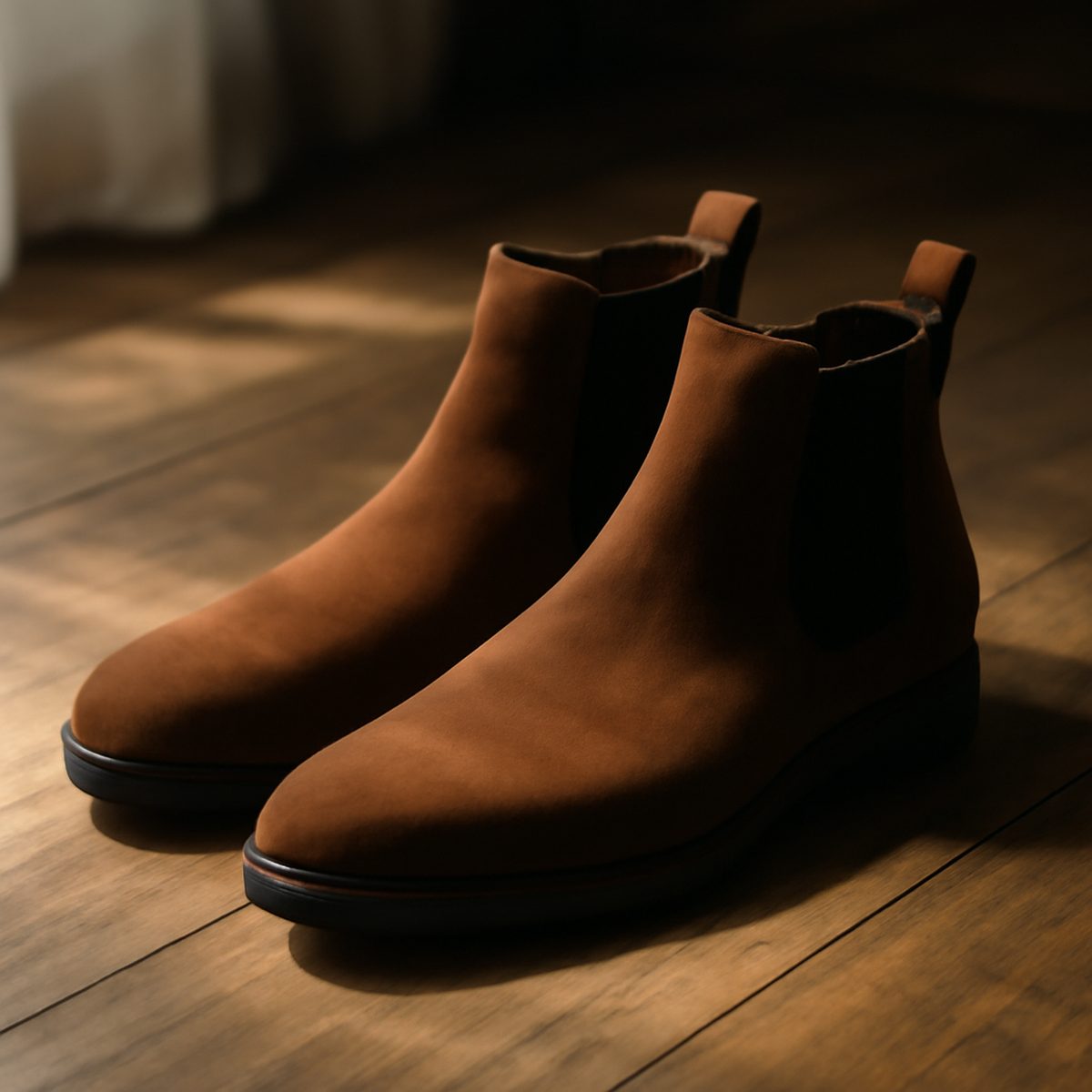
The chelsea boot in leather carries a certain formality that not every day calls for, its polished finish suited to tailoring more than the looser, more casual dressing most men now spend their weekdays in. Suede solves this without sacrificing the silhouette that makes the chelsea boot so consistently useful — the clean elastic side panel, the streamlined toe, the ease of stepping in and out without laces. What suede adds is texture and a softer visual register, a boot that reads as considered without insisting on a jacket to justify it.
Why suede changes the boot’s character
Suede’s napped surface absorbs light rather than reflecting it, which fundamentally changes how a chelsea boot reads visually compared to its polished leather counterpart. Where a leather chelsea boot has a certain sharpness, almost formal even in a casual outfit, suede softens that same silhouette into something that sits comfortably under jeans or chinos without feeling like a downgrade from tailoring. This versatility is a large part of why suede has become the more commonly reached-for option among the category covered in the chelsea boot and its rivals, where the silhouette itself is compared against several other slip-on boot styles that compete for the same everyday role in a considered wardrobe.
Choosing a colour that actually earns its keep
Suede chelsea boots are available across a wide colour range, but the most genuinely versatile options remain the tobacco, sand, and dark grey families, each of which pairs comfortably with the full range of denim and chino tones most men actually wear day to day. Bolder colours — a deep burgundy, a forest green — can work beautifully but demand a more considered approach to the rest of an outfit, and are worth adding as a second or third pair once the foundational neutral option is already well established in rotation. This same logic of building a considered base before experimenting applies across the broader guidance in how to build a shoe wardrobe.
What defines a genuinely well-made pair
- A full-grain suede upper with even, consistent nap across the whole boot, rather than patchy or inconsistently finished panels
- A gusseted elastic side panel matched closely to the suede tone, since a mismatched or overly visible elastic panel undermines the boot’s clean silhouette
- A leather sole for more formal use, or a considered rubber sole for genuine everyday wear in a climate prone to rain
- A pull tab at the heel substantial enough for genuine daily use, since this is the component that fails first on lower-quality pairs
Caring for suede in a humid climate
Suede requires slightly more deliberate care than polished leather, particularly in a genuinely humid environment where moisture and staining are constant low-level risks. A dedicated suede brush, used regularly rather than only when visibly needed, keeps the nap raised and prevents the flattened, worn appearance that untreated suede develops with heavy use. A suede protector spray, applied before first wear and reapplied every few months, offers meaningful water resistance without altering the material’s texture or colour. For genuinely wet conditions, it is worth having a leather-soled alternative on hand as well; our guide to the best boots for the city covers options built more specifically around wet-weather resilience.
“People are too precious with suede. Treat it properly once, brush it regularly, and it’s actually a more forgiving material day to day than polished leather — it just hides scuffs differently,” one shoemaker who has worked with suede uppers for over two decades told us.
Making the pair last
As with any well-made boot, longevity comes down largely to rotation and rest — wearing the same pair on consecutive days does not allow the interior lining time to dry out fully, which shortens the life of both the lining and, eventually, the sole. A cedar shoe tree, inserted after each wear, helps the boot hold its shape and gently draws out moisture from the interior. For readers building a considered rotation of everyday footwear, our broader Style & Watches coverage sets suede chelsea boots in context alongside the loafers, derbies, and other staples worth owning in parallel.
Sizing and fit specific to suede
Suede behaves slightly differently to leather when it comes to break-in, generally softening and moulding to the foot somewhat faster given the material’s inherently softer, more pliable structure, which means a suede chelsea boot bought slightly too large will stretch further and faster than a leather equivalent, often ending up genuinely loose within a few months of regular wear. It is worth sizing a touch more snugly than instinct might suggest for exactly this reason, particularly around the ankle, where the elastic gusset needs a reasonably close fit to maintain the boot’s clean silhouette rather than gaping or bunching. Trying a pair on in the afternoon, when feet have naturally swollen slightly from a day’s activity, gives a more reliable sense of true fit than a first-thing-in-the-morning fitting, a general rule worth applying to any boot purchase but especially relevant given how readily suede continues to give with wear long after the initial fitting.
What a good pair costs, and why
Price within the suede chelsea boot category varies considerably, and buyers should understand roughly what drives the gap between an entry-level pair and a genuinely well-constructed one. The most significant factor is typically the sole and welt construction — a Goodyear-welted or similarly resoleable construction costs meaningfully more upfront than a cemented sole but pays for itself over years of wear through the ability to have soles replaced rather than discarding the entire boot once the sole wears through. Suede quality itself also varies more than buyers often realise, with genuine full-grain suede from a reputable tannery commanding a real premium over a thinner, lower-grade split suede that pills and wears unevenly within a season. For a boot intended for genuine everyday rotation rather than occasional wear, paying for both of these elements upfront is, by most accounts, considerably more economical over the boot’s full working life than replacing a cheaper pair every year or two.
A good pair of suede chelsea boots earns its place through sheer usefulness more than any single standout feature — comfortable enough for a full day on foot, considered enough to hold its own against tailoring, and casual enough to wear with almost anything else in a weekday wardrobe. Few single purchases offer quite that range for the money. For those weighing other styles in the same material, our guide to the best everyday suede boots considers the wider field.
Daniel has spent fifteen years arguing that the best watch is the one you never take off.