How to Choose the Right Dining Bench
A well-chosen dining bench does more than save space. Done properly, it changes how a whole table is used and how guests actually sit at it.
 By Priya Nair
30 August 2026 · 5 min read
By Priya Nair
30 August 2026 · 5 min read
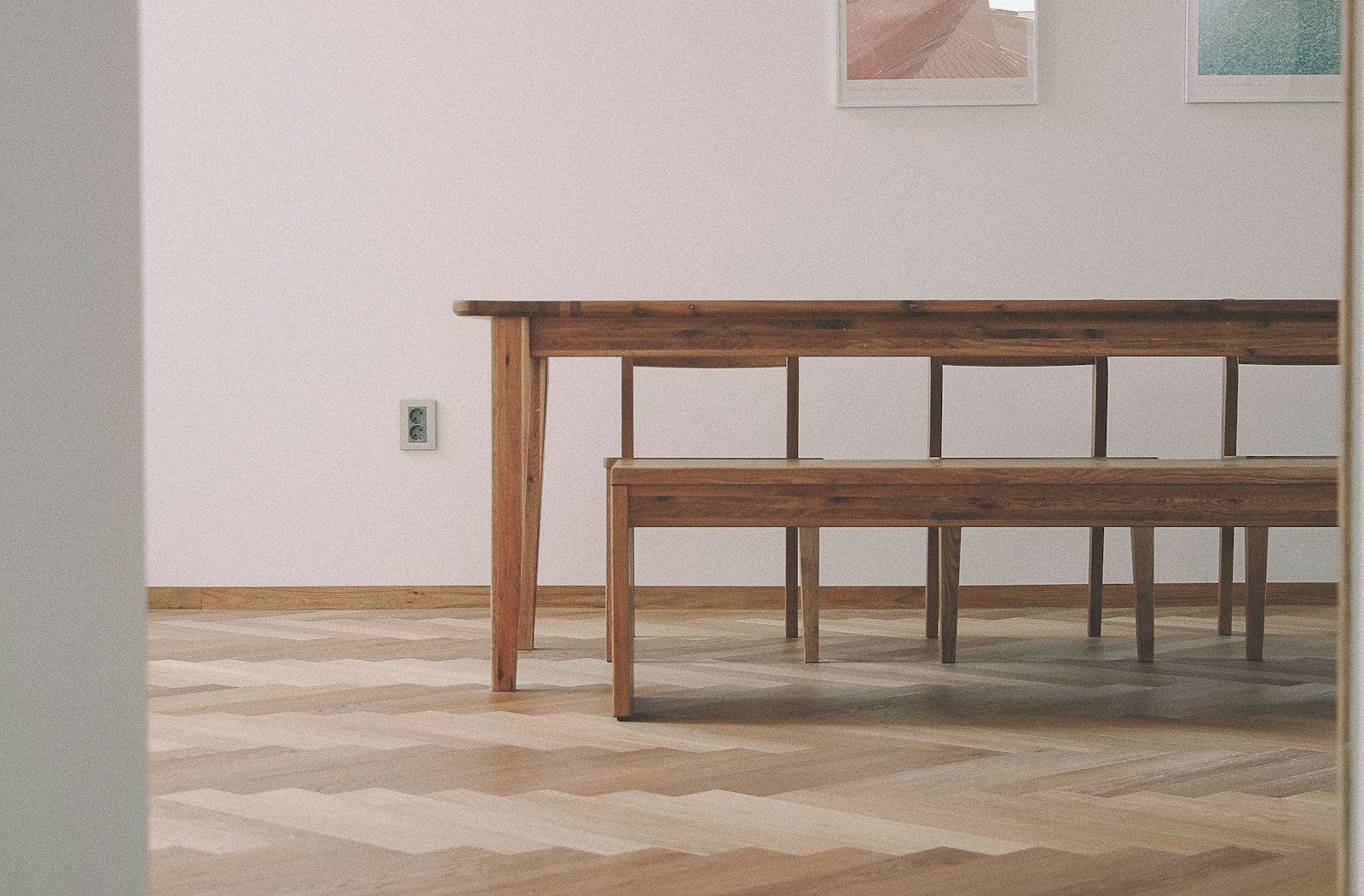
A dining bench is too often chosen purely as a space-saving compromise, tucked against a wall to squeeze in an extra seat or two. Done properly, it is a considerably more interesting piece of furniture than that — one that changes the whole rhythm of a table, encouraging a looser, more communal way of sitting than a row of individual chairs ever quite manages.
Bench, Chairs, or Both
The most common and often most successful configuration pairs a bench on one side of the table with chairs on the other, giving a dining room visual variety without sacrificing the practicality of chairs with backs for anyone who prefers proper back support over a long meal. A bench on both long sides suits a more relaxed, communal household — the kind of table built for large family gatherings — but can feel slightly informal for a household that entertains more formally.
A single bench used at the head or foot of a table is a less common but genuinely elegant option, particularly for a narrower table where two chairs would feel cramped. It also solves a practical problem in households with young children, who tend to find a bench considerably easier to climb in and out of than a chair.
Getting the Length Right
As a general rule, allow 60 to 65cm of bench length per seated person for genuine comfort, slightly more generous than the allowance typically given for individual chairs, since diners on a bench need a little more room to shift and settle. A bench intended to seat three should measure at least 1.8 to 2m in length; one seating four comfortably wants closer to 2.4m.
It is worth measuring the bench against the specific table it will sit beside rather than assuming proportions will simply work themselves out — a bench noticeably shorter than the table it accompanies looks like an afterthought, while one that extends well past the tabletop can make a room feel crowded and awkward to navigate. Our guide to choosing the right dining table is worth reading in tandem with any bench purchase for exactly this reason.
A Few Rules of Thumb
- Bench height should sit a few centimetres below the table’s underside clearance — typically 45cm, matching standard dining chair seat height.
- Bench depth of 35 to 40cm gives comfortable room to sit without crowding the table edge.
- Backless benches save visual and physical space, but a low-backed option is worth considering for a bench used for longer, more formal meals.
Materials and Durability
Solid timber remains the most durable and visually versatile choice for a dining bench, standing up well to the daily use a family table receives and ageing attractively rather than simply wearing out. Upholstered benches — sometimes called banquette seating when built into an alcove or window nook — bring genuine comfort and a softer, more residential feel, though they demand more careful fabric choice given how much daily contact and occasional spillage a dining seat receives.
For households considering a built-in banquette rather than a freestanding bench, storage underneath is a genuine practical advantage worth factoring into the decision — a considered use of space that a freestanding bench simply cannot offer.
A Singapore furniture maker who builds benches to order for dining tables notes a pattern among clients: “People ask for a bench thinking it will be a compromise. Within a year, most tell me it has become the seat everyone actually fights over.”
Styling a Bench Well
A bench pairs particularly well with cushions in place of a fixed upholstered seat, offering flexibility to refresh the look of a dining room without committing to reupholstery. Two or three considered cushions, in a durable, easily cleaned fabric, soften a hard timber bench considerably and can be rotated seasonally in a way a fully upholstered piece cannot. Our piece on the art of the well-chosen throw and cushion offers further guidance on choosing fabrics that hold up to genuine daily use.
Mixing a bench’s material and finish deliberately against the table and chairs it accompanies — rather than matching everything precisely — tends to look more considered than a uniform dining set bought as a single package. A pale oak bench against a darker walnut table, for instance, reads as an intentional decision rather than a mismatch, provided the two woods share a similar warmth of tone.
Households often overlook how a bench interacts with a rug beneath the table, and this is worth planning for. A bench being pulled in and out repeatedly puts more strain on a rug’s edge than a chair, which lifts cleanly, so a slightly larger, more durable rug — extending well beyond where the bench sits when pushed in — helps avoid premature wear at exactly the point a bench is used most.
Comfort Over a Long Meal
The one genuine trade-off of a bench against individual chairs is back support, and this is worth being honest about before committing an entire side of a table to bench seating. For households that entertain frequently with meals running well over an hour, a low-backed bench or a generous run of supportive cushions along the wall side of the seat makes a meaningful difference to how long guests are comfortable staying seated. A fully backless bench works best for shorter, more casual meals — weekday breakfasts and quick lunches — where guests are unlikely to remain seated for an extended stretch.
A Seat Worth the Consideration
Choosing a dining bench well means treating it as genuine furniture rather than an economy measure, with the same careful attention to proportion, material and comfort given to any chair chosen for the same room. For the room it sits within, our guide to the considered dining room and our piece on the best dining room lighting both address the wider setting a bench needs to work within. Our Homes & Culture section carries further guides for anyone building a dining room worth gathering around for many years to come, whatever seating arrangement is ultimately chosen for it.
Priya tours the homes most people only glimpse from the road, and asks how they are really lived in.